Originally scribed circa 2014-2015
What is the Divine Masculine?
The Divine Masculine is a spiritual, psychological, and archetypal pattern. It points toward the most mature, life-giving, and sacred forms of masculine expression: strength joined with wisdom, power joined with service, desire joined with reverence, and action joined with care.
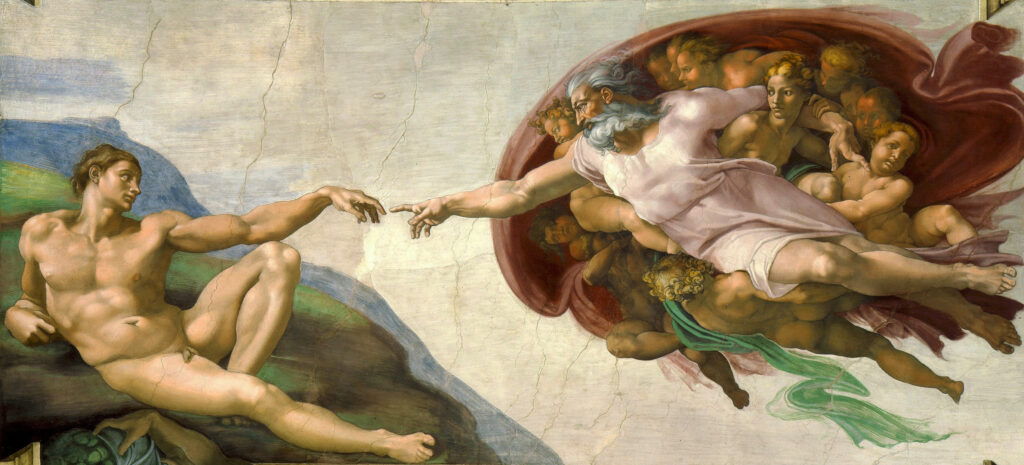
Like the Divine Feminine, the Divine Masculine exists beyond any single person. “He” belongs to the larger field of human experience, myth, psyche, and spirit. Yet this pattern also moves through individual lives. It shapes thoughts, beliefs, instincts, choices, relationships, and behavior. When it is conscious, it can guide a person toward greater wholeness. When it is wounded, distorted, or denied, it often appears as fear, control, passivity, anger, shame, or hunger for power.
As embodied spiritual beings, we each carry a rich inner life. Masculine and feminine energies live within the psyche, not as fixed gender roles, but as living forces. They move together. They challenge and balance one another. They help form the way we love, act, protect, create, listen, lead, surrender, and belong.
For men seeking a deeper understanding of their masculinity, the Divine Masculine is not a distant, jealous, vengeful male god. Nor is it a license for dominance, emotional hardness, or conquest. It is better understood as a sacred mirror. It reveals the masculine aspects of the self that are strong and trustworthy, as well as the parts that need healing, discipline, compassion, and support.
This matters in a time when masculinity is often described in extremes. Some voices reduce it to aggression, control, status, and sexual entitlement. Others speak of masculinity mostly as a problem to be corrected or restrained. Neither view is whole. The Divine Masculine offers another way: a vision of masculinity rooted in presence, integrity, courage, tenderness, protection, devotion, and wise use of power.
For a man reading this essay, these archetypes may help you see your own masculine nature with more clarity. You may recognize where the King, Priest, Warrior, Lover, Sage, and God are already active in your life. You may also notice where one of them has gone silent, become wounded, or taken on a distorted form. The purpose is not to become someone else. The purpose is to call forth a fuller, cleaner, more conscious expression of what already lives within you.
Women reading this essay may also find value here. Many women sense an inner masculine presence within the psyche: the one who protects, focuses, acts, discerns, provides structure, and stands firm when needed. To understand the Divine Masculine is to understand this inner figure more clearly, and to invite him into right relationship with the rest of the self.
Together, these archetypes offer a brief map of masculine spiritual development. They do not define all that a man is, and they should not be used as rigid roles. They are symbols, mirrors, and invitations. Each one reveals a different face of sacred masculine energy, and each one asks something different of us.
God, King, Priest, Warrior, Lover, Sage
The psyche contains many archetypal patterns, but this essay will focus on six: God, King, Priest, Warrior, Lover, and Sage. These six have been chosen because they speak strongly to masculine development. Each one shapes a different part of the inner life: how we relate to power, purpose, discipline, love, wisdom, spirit, and the world around us.
These archetypes are not fixed identities. They are living patterns within the psyche. They can be neglected, wounded, exaggerated, or brought into wiser expression. When we give them conscious attention, they begin to strengthen and clarify. What was weak may become steady. What was distorted may become clearer. What was buried may return with dignity.
To work with these archetypes is not to imitate an image of manhood from the outside. It is to enter into relationship with the deep masculine forces already present within the self. Each archetype offers a particular kind of medicine. Each one asks for a particular kind of honesty. Together, they form a useful map for understanding the Divine Masculine as it moves through human life.
God
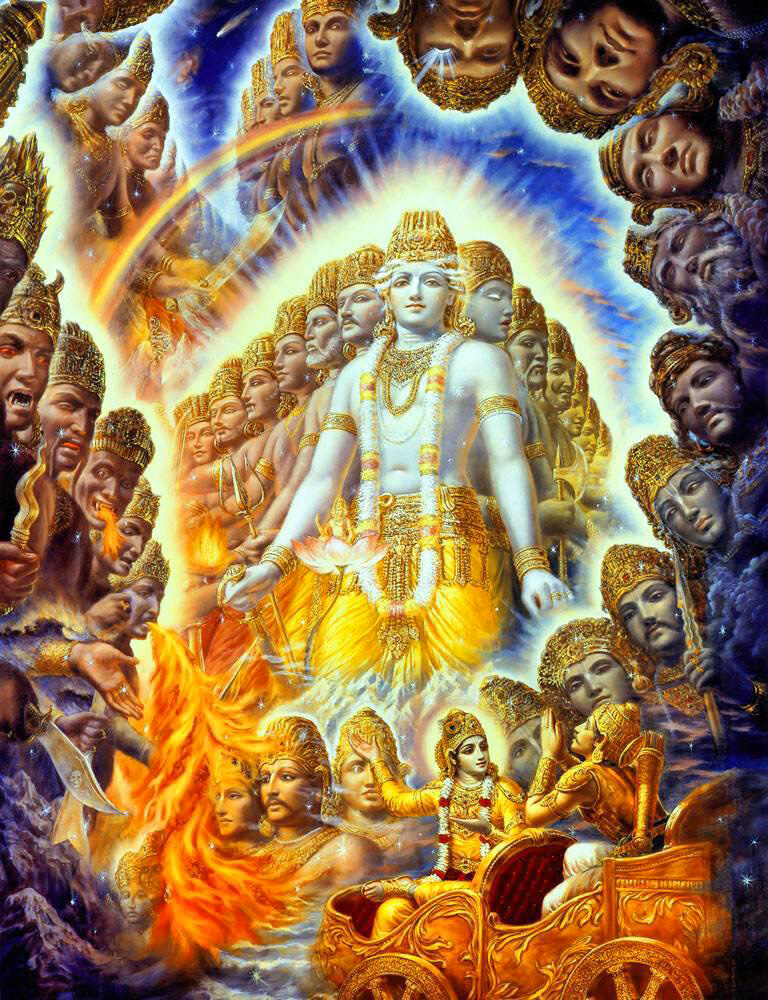
The God archetype represents the transcendent aspect of the masculine psyche. It is the part of the self that senses its connection to all life, all beings, and the unseen order beneath ordinary experience. This archetype belongs to spirituality, mystical awareness, intuition, and the direct knowing that life is larger than the personal self.
In a man, the God archetype does not make him superior to others. It does not inflate him into grandiosity or spiritual self-importance. In its healthy form, it humbles him. It opens him. It gives him a felt sense that he belongs to something vast, and that every other being belongs to that same living whole.
A man expressing this archetype in its fullness carries a quiet spiritual confidence. He does not need to dominate a room. He does not need to prove that he is wise, chosen, awakened, or special. His power is in his presence. He is centered in himself, but not self-absorbed. He listens deeply. He sees beneath surfaces. He brings a calm awareness into the space around him.
The God archetype is rooted in love, but not sentimental love. This is love as spiritual recognition. It is the love that sees the sacred in others, even when they are wounded, confused, or afraid. A man living from this archetype may become a source of steadiness for those around him because his presence reminds them of something true in themselves.
This archetype also carries creative force. It receives vision, plants seeds, opens possibilities, and releases ownership of what comes through. The man touched by this energy may inspire new ideas, new healing, new forms of beauty, or new ways of seeing. He does not create only for personal gain. At his best, he serves what wants to come into being for the good of the whole.
The God archetype also stands for human dignity. In its mature form, it cannot be used to justify hatred, exclusion, or spiritual hierarchy. It recognizes the divine right of each person to seek happiness, freedom, love, and belonging. It honors this right across race, gender, sexuality, class, culture, and difference.
When this archetype is distorted, however, it can become dangerous. A man may confuse spiritual insight with personal superiority. He may believe his desires are divinely sanctioned, his opinions beyond question, or his authority above accountability. This is not the God archetype in its fullness. It is inflation. It is the ego wearing sacred clothing.
When the God archetype is absent or underdeveloped, a man may feel cut off from meaning. He may live only through appetite, achievement, distraction, or survival. He may lose contact with wonder. He may stop asking what is sacred, what is true, or what his life is in service to.
To develop this archetype is to return to spiritual orientation. It may be strengthened through meditation, prayer, solitude, ritual, time in nature, creative practice, dreamwork, service, or honest contact with mystery. Its growth asks a man to become still enough to listen, humble enough to receive, and clear enough to act from love rather than fear.
A man in right relationship with the God archetype becomes more present, compassionate, inclusive, intuitive, creative, and spiritually awake. He carries a sense of blessing into the world. Not because he claims divine status, but because he remembers that life itself is sacred.
King
The King archetype represents order, blessing, stewardship, and mature relationship to power. If the God archetype receives vision from the deep spiritual source, the King gives that vision a place to live. He brings form, structure, protection, and continuity. He takes what is inspired and helps it become real.
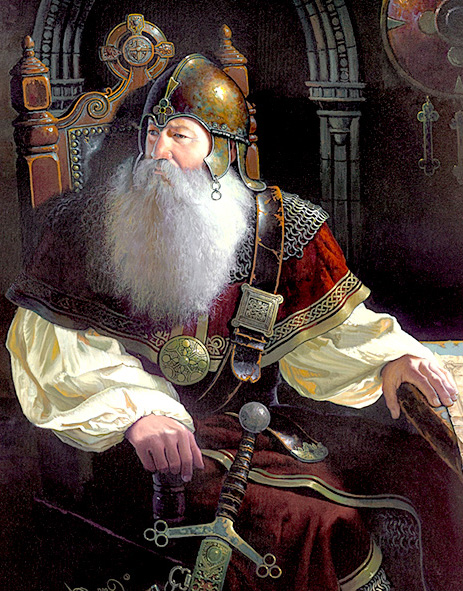
The King governs the field of embodied life: home, family, work, resources, land, community, responsibility, and influence. He is concerned with what is being built, what is being cared for, and what kind of life can grow under his watch. His question is not only, “What do I want?” His deeper question is, “What has been entrusted to me, and how shall I serve it well?”
In his healthy form, the King is not a tyrant. He does not confuse leadership with control. He does not need others to shrink so that he can feel large. His authority comes from steadiness, fairness, and strength of character. Others trust him because he does not sell himself to every passing impulse, mood, appetite, or fear.
The mature King has an inner throne. This does not mean arrogance. It means he has a stable center. He can listen without collapsing, lead without bullying, and make decisions without needing constant praise. He carries responsibility with dignity. He understands that power is not for self-glorification. Power is for protection, nourishment, order, and blessing.
To be with a man in right relationship with the King archetype often feels calming. His presence steadies the room. He brings a sense that things can be handled. He supports the well-being of those around him and wants them to flourish, not serve his ego. He notices what is needed. He makes space for others to contribute. He encourages growth without forcing it.
The King also carries a fatherly quality, whether or not a man is an actual father. This fatherliness is not sentimental or possessive. It is generous, grounded, and watchful. It says, “You are safe here. You have a place here. Bring forth what is best in you.” The King blesses life by recognizing its worth and helping it stand upright.
This archetype is closely tied to abundance, but not in the shallow sense of wealth alone. The King understands resources. He knows that money, time, skill, land, attention, and trust must be handled wisely. He builds systems that support life rather than drain it. He seeks enough for himself and enough for those within his care. His prosperity has roots. It is not frantic, greedy, or hollow.
When the King is distorted, he may become controlling, entitled, rigid, vain, or hungry for obedience. He may use power to dominate rather than protect. He may demand loyalty without offering care. He may become the tyrant who rules through fear, or the weak king who wants the title but refuses the burden. Both distortions wound the people and places connected to him.
When the King is absent or underdeveloped, a man may struggle to organize his life. He may avoid responsibility, drift from one desire to another, or resent the demands placed upon him. He may have vision but no structure, talent but no discipline, love but no container strong enough to hold it. Without the King, life can remain scattered.
To strengthen the King archetype, a man must come into right relationship with responsibility. He must learn to keep his word, care for what is his to care for, make fair decisions, and bring order where there is neglect or confusion. He must also learn to bless. This may sound simple, but it is rare. To bless is to use one’s presence, words, resources, and authority in a way that helps life grow.
A man in the fullness of the King archetype is steady, generous, fair, protective, discerning, and deeply committed to the good of those within his care. He does not rule to be admired. He serves by creating conditions in which life can flourish.
Priest
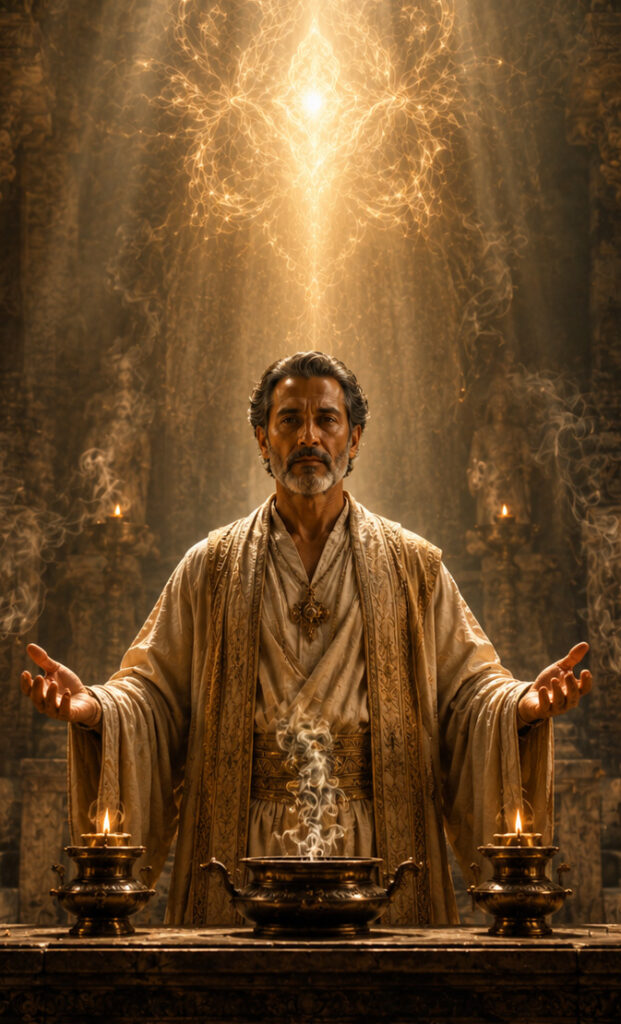
The Priest archetype may be one of the least understood masculine archetypes in modern life. Our culture knows the businessman, the athlete, the soldier, the celebrity, the rebel, and the expert. It has far less room for the man who tends the inner fire, listens for the voice beneath the noise, and serves as a bridge between the visible and invisible dimensions of life.
The Priest belongs to spiritual practice, sacred attention, ritual, devotion, discernment, and the hidden dimensions of life.
In older language, this hidden knowledge was called “occult,” meaning that which is concealed from ordinary sight. The Priest is not drawn to the shadowy glamour of secrecy. He is concerned with what lies beneath the surface: dreams, symbols, patterns, ancestral memory, intuition, wound, calling, and the movements of the soul.
If the God archetype is direct connection with the sacred, the Priest is the one who tends that connection. He builds the altar. He keeps the lamp lit. He creates the conditions through which spirit can be heard, honored, and brought into daily life. He knows that sacred experience must be grounded through practice, humility, and service, or it can become fantasy, inflation, or escape.
The Priest mediates between the conscious and unconscious mind. He listens to what has been buried, exiled, feared, or forgotten. He helps translate the language of the deep psyche into insight, healing, and right action. In this way, he serves the inner community of the self, helping the many voices within a person come into clearer relationship.
A man in right relationship with the Priest archetype carries depth. He is thoughtful, reflective, and inwardly attuned. He does not rush to the surface of things. He can sit with silence. He can stay present with grief, mystery, tension, and change without needing to explain everything too quickly. His strength comes from spiritual steadiness and a practiced relationship with the unseen.
The Priest also knows how to work with charged energy. Anger, desire, sorrow, fear, shame, longing, and awe do not automatically overwhelm him. He has ways of holding them, naming them, praying with them, breathing through them, and offering them to something greater than the ego. What might topple another man becomes, in him, material for transformation.
This does not make him detached or cold. The mature Priest is deeply involved with life, but he is not easily possessed by passing storms. He can step back far enough to see clearly, then step forward with grace. He is not easily seduced by trends, group hysteria, spiritual glamour, or the need to appear wise. He knows that real spiritual authority grows slowly, through practice, service, failure, repentance, and return.
When this archetype is distorted, the Priest may become manipulative, secretive, self-important, or spiritually evasive. He may use hidden knowledge to gain power over others. He may confuse charisma with holiness, or intensity with truth. He may hide from ordinary responsibility behind mystical language. The false Priest wants to be seen as special. The mature Priest wants to serve what is sacred.
When the Priest is absent or underdeveloped, a man may lose contact with his inner life. He may have ideas about spirituality but no practice. He may feel spiritually hungry yet distrust his own intuition. He may avoid silence because silence reveals too much. Without the Priest, life can become flat, overly literal, and cut off from meaning.
To strengthen the Priest archetype, a man must build a real relationship with spiritual practice. This may include meditation, prayer, ritual, dreamwork, time in nature, sacred study, breathwork, ancestral work, or service to others. The form matters less than the sincerity. The Priest grows through repeated acts of attention. He learns to listen, cleanse, bless, unveil, release, and return.
A man in the fullness of the Priest archetype is spiritually grounded, inwardly clear, devoted, discerning, humble, and strong in the presence of mystery. He does not stand above others. He stands at the threshold, tending the passage between the human and the divine.
Warrior
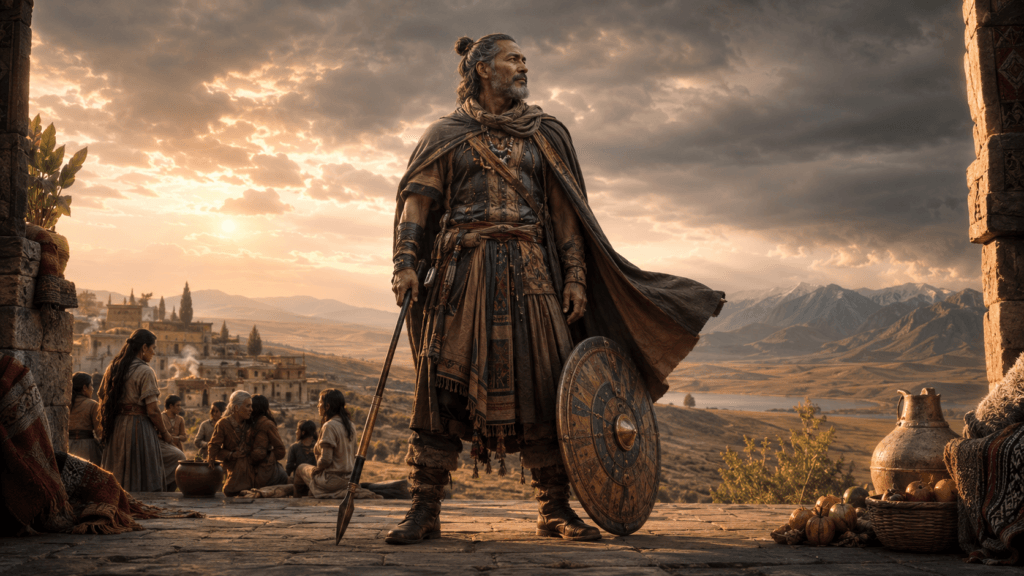
The Warrior archetype may be the most visible masculine archetype in modern culture, and also one of the most distorted. We see him in soldiers, athletes, action heroes, martial artists, rebels, protectors, competitors, and men who are praised for force, endurance, toughness, and conquest. Yet these images often show only the outer shell of the Warrior. They rarely show his inner life.
In his sacred form, the Warrior is not defined by aggression. He is defined by disciplined action in service to what is right. He protects. He defends. He sets boundaries. He faces danger, conflict, hardship, and fear without surrendering his soul to hatred or cruelty.
The mature Warrior has clarity. He knows what he is serving. He does not act from blind rage, wounded pride, or hunger for domination. His strength has been trained. His instincts have been tempered. He can move quickly when needed, but he does not mistake impulse for courage.
This archetype carries decisiveness, focus, endurance, humility, and moral force. The Warrior can do hard things. He can stand in the difficult place and remain steady. He can say no. He can protect the vulnerable. He can sacrifice comfort, approval, or personal gain when a greater good requires it.
A man in right relationship with the Warrior archetype is not emotionally numb. He is not cut off from tenderness. In fact, his protection means more because he is in touch with what he loves. His courage grows from care. He fights the “good fight” not because he loves conflict, but because he loves life enough to defend it.
To be with such a man often feels safe. His strength is present, but not oppressive. He does not need to announce it. He does not need praise for every act of service. He contributes without fanfare. He takes his place when work needs doing, and he does not make the work about himself.
The mature Warrior shows respect. He honors elders, women, children, other men, animals, land, and the living world. This respect is not ornamental. It shapes his conduct. He understands that real strength does not give him permission to take what he wants. Real strength binds him to a higher standard of behavior.
The Warrior also knows how to work with others. He can take direction. He can lead when needed. He can follow when that serves the task. He finds honor in shared effort. He does not need every field to become a contest, and he does not measure his worth only by victory.
When this archetype is distorted, the Warrior becomes dangerous. He may turn into the bully, the brute, the zealot, the mercenary, or the man who confuses violence with power. He may become addicted to conflict. He may see tenderness as weakness and difference as threat. In this form, the Warrior no longer protects life. He feeds on opposition.
When the Warrior is absent or underdeveloped, a man may struggle to act. He may avoid conflict even when truth requires speech. He may have no clear boundaries. He may collapse under pressure, abandon his own values, or let others decide the shape of his life. Without the Warrior, goodness may remain only an intention. It never becomes a stand.
To strengthen the Warrior archetype, a man must train his will. This training can happen through physical discipline, martial arts, honest work, service, keeping commitments, learning to say no, and facing difficult conversations without fleeing or attacking. The Warrior grows when a man learns to act with courage and restraint at the same time.
A man in the fullness of the Warrior archetype is disciplined, protective, humble, focused, loyal, and brave. He does not seek conflict, but he will not abandon what he loves when conflict comes. His gift is sacred strength in action.
Lover
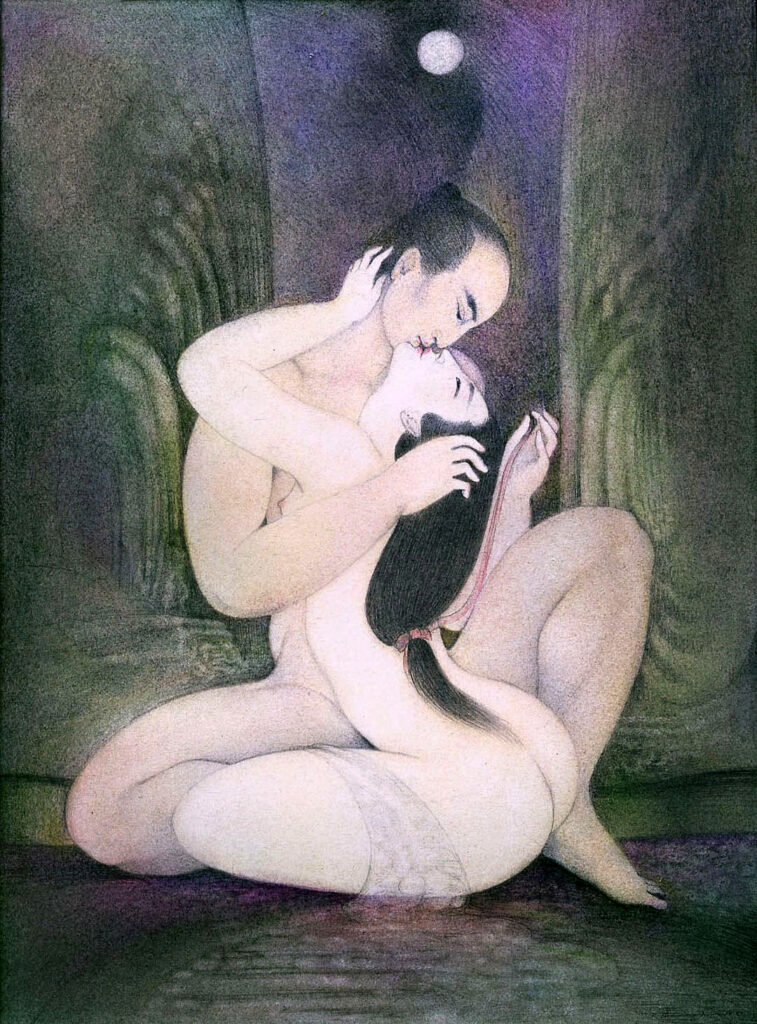
The Lover archetype is one of the most familiar masculine energies, and also one of the most misunderstood. In modern culture, the Lover is often reduced to sex, romance, seduction, fantasy, or personal pleasure. This is a thin version of him. It leaves out his depth, his tenderness, his spiritual force, and his capacity for real communion.
In his sacred form, the Lover is the masculine as embodied aliveness.
He is Eros: the force that draws life toward contact, beauty, union, pleasure, and creation. He is not only sexual, though sexuality is one of his natural languages. He is the part of the masculine psyche that wants to touch and be touched by life.
The Lover joins flesh and spirit. He teaches that the body is not an obstacle to the sacred, but one of its living doors. Through the senses, he enters the world fully: skin, scent, breath, music, food, color, movement, warmth, and the subtle charge between beings. He does not stand outside life and analyze it from a distance. He enters. He feels. He responds.
The domain of the Lover includes sensuality, sexuality, beauty, intimacy, creativity, play, affection, appetite, fertility, and joy. He is present in erotic love, but also in art, music, friendship, cooking, dancing, laughter, gardening, poetry, and the quiet pleasure of sunlight on the skin. Wherever life becomes vivid and worth tasting, the Lover is near.
A man in right relationship with the Lover archetype is comfortable in his body. He is not ruled by shame, but neither is he ruled by appetite. His sensuality is warm, awake, and respectful. He does not take. He meets. He understands that true erotic presence requires attention, consent, attunement, and care.
The mature Lover is deeply relational. He notices mood, tone, breath, and subtle shifts in another person. He is sensitive without being fragile. He can be passionate without being consuming. He can desire without turning the other into an object. His gift is not performance. His gift is presence.
To be with such a man often feels enlivening. He brings warmth into the room. He notices beauty and helps others notice it too. He may make an ordinary meal, walk, conversation, or embrace feel more awake, more textured, more human. Around him, life seems to regain color.
The Lover also carries play. This is not childishness. It is the soul’s ability to move, improvise, flirt with life, and delight in the moment without needing to possess it. The Lover reminds the masculine that not everything exists to be achieved, conquered, organized, or explained. Some things ask only to be felt.
In his fullness, the Lover has stopped performing. He is not trying to prove his desirability, masculinity, sexual skill, artistic depth, or emotional sensitivity. He has relaxed into being. This relaxation gives him a quiet magnetism. His aliveness is not forced. It rises naturally from his contact with himself, others, and the world.
When the Lover is distorted, he may become the seducer, addict, consumer, or romantic manipulator. He may chase pleasure without love, intensity without intimacy, conquest without reverence. He may use charm to avoid truth, sexuality to escape loneliness, or beauty to avoid responsibility. In this form, the Lover no longer joins flesh and spirit. He separates them, and both become thinner.
When the Lover is absent or underdeveloped, a man may become numb, dry, joyless, or cut off from his body. He may distrust pleasure, fear intimacy, or live mostly through work, duty, thought, and control. He may ache for connection but not know how to receive it. Without the Lover, life can become efficient but empty.
To strengthen the Lover archetype, a man must return to his senses. He can practice slowing down, feeling the body, making beauty, listening to music, dancing, cooking, touching with care, speaking honestly about desire, and allowing joy without guilt. He must also learn reverence. Pleasure becomes sacred when it is joined with presence, gratitude, and respect.
A man in the fullness of the Lover archetype is sensual, warm, creative, playful, embodied, emotionally awake, and deeply present. He helps others feel seen, desired, safe, and alive. His gift is the remembrance that life is not only to be survived or mastered. It is to be touched, tasted, loved, and received.
Sage
The Sage archetype represents wisdom, perspective, discernment, and right action. He is the masculine capacity to step back, see clearly, listen deeply, and respond from a place larger than impulse or opinion. Where the Priest tends the living bond between the human and the sacred, the Sage brings insight into practical use.
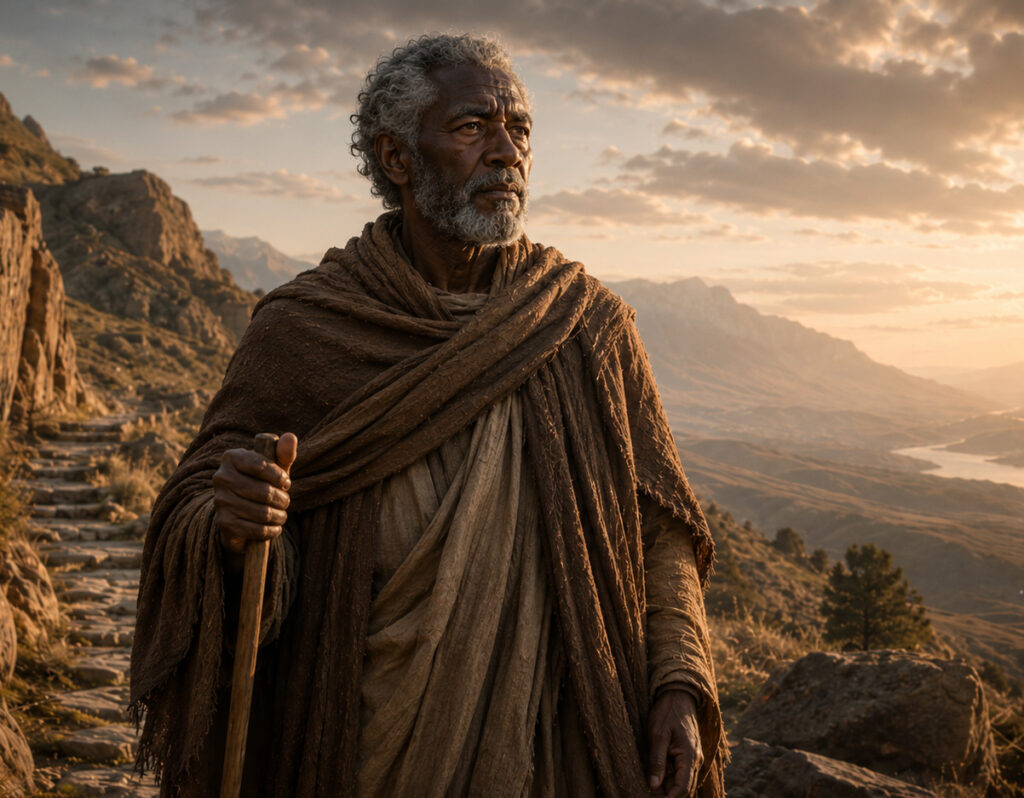
The Sage is closely related to the Priest, but his center is different. The Priest serves through devotion, ritual, and care for the unseen. The Sage serves through wisdom, counsel, timing, and clear perception. He asks: What is true here? What is needed? What action belongs to this moment?
This archetype is aligned with dharma, or right relationship with the path of life. Dharma is not simply duty in a narrow sense. It is the deeper order of things: the way a person, action, choice, or life becomes aligned with truth. The Sage helps the ego listen to the Higher Self without becoming inflated by it. He allows wisdom to guide the personality rather than letting the personality misuse wisdom for pride, control, or display.
The Sage observes. He watches patterns unfold over time. He listens to what is said and what is not said. He gathers information from the body, the mind, the emotions, the outer world, the unseen world, and the quiet intelligence of the earth. He is not passive, but he is not rushed. He knows that some truths reveal themselves only after the noise has settled.
A man in right relationship with the Sage archetype carries a calm, thoughtful presence. He does not need to be the loudest voice in the room. He does not rush to advise, correct, or display what he knows. Often, he waits. He listens until the heart of the matter begins to show itself. Then, when he speaks, his words may be few, but they land.
The Sage offers counsel that opens a path. He may help another person see the larger pattern, the hidden choice, the consequence, the wound, or the next honest step. He does not take over another person’s life. He does not demand obedience. He helps others come into better relationship with their own wisdom.
This archetype becomes especially valuable in times of crisis. When fear rises and people lose perspective, the Sage can remain clear. He does not deny danger, grief, confusion, or change. He simply does not let them rule his sight. His steadiness helps others breathe again, gather themselves, and find the next right action.
The Sage is also a guardian of proportion. He knows when something is urgent and when it is merely loud. He knows when to speak and when silence will teach more. He knows when action is required and when restraint is the wiser act. His wisdom is not abstract. It is lived, tested, and grounded.
In his mature form, the Sage is often humble. He may support others quietly, without needing credit. He may offer a sentence, a question, a story, or a simple gesture that changes the direction of someone’s life. He trusts wisdom more than applause. He serves truth more than identity.
When the Sage is distorted, he may become cold, superior, aloof, or overly abstract. He may use knowledge to distance himself from feeling. He may hide behind analysis, spiritual concepts, or cleverness. He may become the critic who sees everything but risks nothing, or the false teacher who enjoys being admired more than he loves truth.
When the Sage is absent or underdeveloped, a man may live reactively. He may mistake emotion for truth, speed for clarity, or opinion for wisdom. He may repeat the same patterns because he never stops long enough to see them. Without the Sage, a man may have strength, passion, and spiritual hunger, but lack the perspective needed to guide them well.
To strengthen the Sage archetype, a man must cultivate stillness, study, reflection, honest self-observation, and patience. He can learn from elders, teachers, dreams, books, nature, silence, failure, and time. The Sage grows through attention to pattern. He asks better questions. He listens longer. He lets truth ripen before he speaks.
A man in the fullness of the Sage archetype is discerning, grounded, patient, humble, perceptive, and wise. He brings clarity without harshness, counsel without control, and perspective without withdrawal. His gift is the ability to help life find its right direction.
A Suggested Practice
To work with these archetypes, begin with contemplation rather than critique.
First, ask what the fullness of each archetype means to you. Not as an abstract idea, but in your own body, choices, relationships, and daily life. What does the King feel like when he is steady and fair? How does the Warrior act when he is brave but not cruel? What does the Lover awaken when he is free of shame? What does the Sage know that you are ready to trust?
Then look for where that archetype already lives in you. Start with evidence of presence. Do not begin by hunting for lack, failure, or deficiency. Look for what you are already doing, even in small ways. A moment of calm responsibility may reveal the King. A clear boundary may reveal the Warrior. A private act of devotion may reveal the Priest. A moment of tender, embodied joy may reveal the Lover.
As you name what is already present, your sight adjusts. It is like standing in a dark room long enough for shapes to emerge. You begin to see what had been there all along. The more attention you give an archetype, the more it comes forward in awareness, choice, gesture, speech, and behavior. This is not forced performance. It is recognition. It is the masculine psyche becoming more conscious of itself.
Contemplation does two things at once. It strengthens what has already taken root, and it gives dormant qualities a place to rise. You see the archetype where it already lives, and you invite it to take form where it has been quiet, wounded, or undeveloped.
When an aspect of an archetype feels new, do not rush to act it out. First, imagine it. Let yourself feel how it would be to think with that quality, speak from it, stand in it, move from it, and choose from it. Then watch for ordinary moments where that new pattern can be lived: a conversation, a boundary, a creative act, a refusal, a repair, a blessing, a moment of restraint.
With practice, the archetype becomes less an idea you admire and more a living power you can embody. The God, King, Priest, Warrior, Lover, and Sage are not roles to perform. They are inner presences to know, strengthen, and bring into right relationship with your life.
Leave a Reply