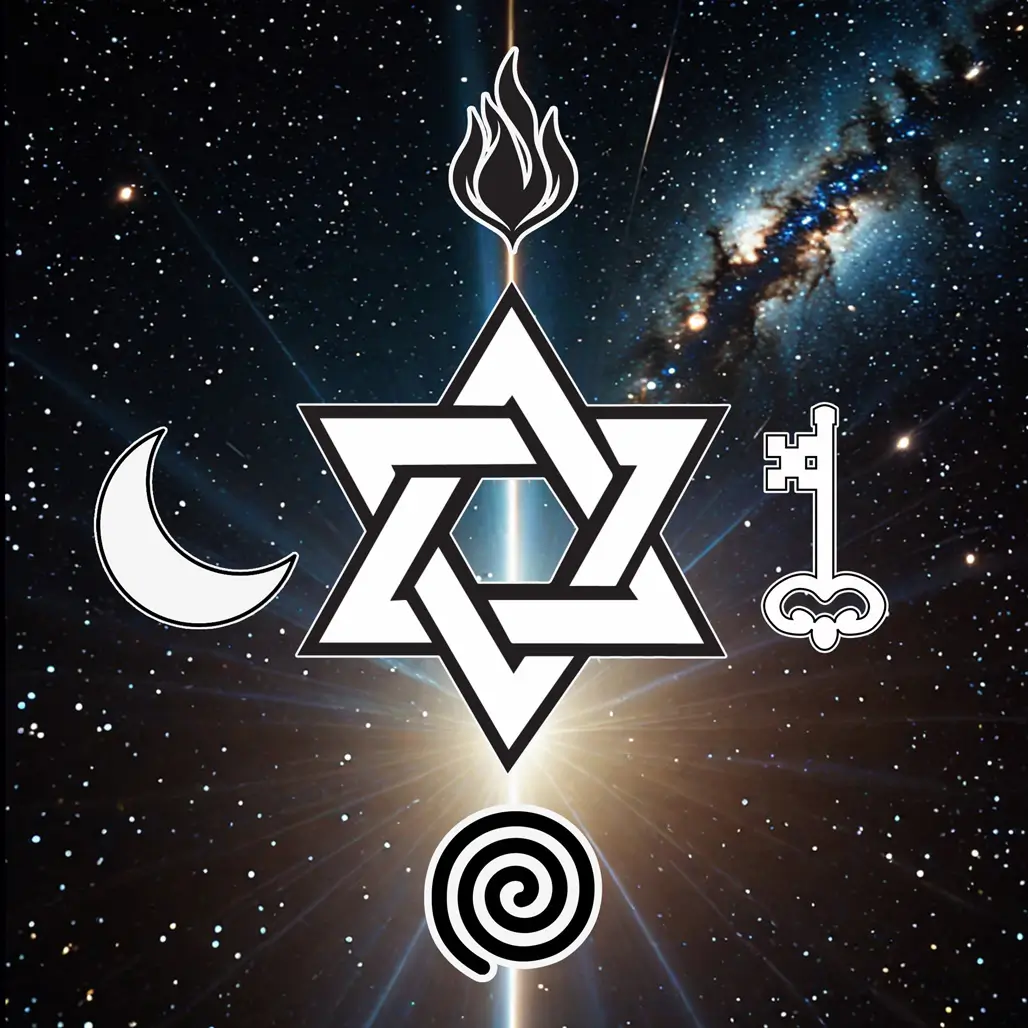
Sex as Presence, Prayer, and Transcendence
Revised and updated June, 2026
For a long time, I had no idea what was missing.
I knew sex could be pleasurable. I knew it could be intimate. I knew it could express love, tenderness, longing, desire, and need. Yet, during my marriage, I often felt there was something more to be known through sex, something I had not yet touched. I could not name it then, but I felt the absence of it.
After my divorce, in 2000, I began studying and practicing Western-style neo-Tantra, also known in many circles as sacred sexuality. I learned from teachers such as David Deida, Bodhi Avinasha, Jwala, Margot Anand, Kalashatra Govinda, Ma Ananda Sarita, Swami Anand Geho, and most profoundly, Daniel Odier. Many of these teachers were students of, or influenced by, Bhagwan Shree Rajneesh, later known as Osho, whose writings I also count among my guides and teachers.
What I found through Tantra and sacred sexuality was not merely a better way to have sex. It was a different way to enter the body, the heart, and the energy field between two people. It was a path of presence. It showed me that erotic energy could become prayer, meditation, healing, and revelation.

Sacred sexuality is the term often given to sex that becomes extraordinary because of its spiritual effect. It is sexual experience that feels sacred, divine, numinous, or transcendent. It fulfills a deep spiritual longing for communion with the divine by inviting divine presence into the shared experience of the partners.
This does not happen by accident, nor does it arise from the usual sexual script of excitement, performance, release, and gratification. Sacred sexuality asks for a different approach. It is less about doing and more about experiencing. It is less about expectation and more about presence.
It is not driven only by pleasure, though it can be intensely pleasurable. It is not centered only on orgasm, though it can open into orgasmic bliss. Its deeper aim is spiritual elevation, reverence, union, and transformation.
In sacred sexuality, sex becomes a form of prayer. It becomes meditation. It becomes a way of meeting one’s partner as a living expression of the divine.
The word Tantra has many layers of meaning. It is often translated as “web” or “to weave,” and it is also understood as “that which expands understanding.” Traditional Tantra is a vast spiritual path with roots in India, involving ritual, mantra, meditation, deity practice, subtle energy, and the transformation of ordinary consciousness into awakened awareness. Western neo-Tantra is a more recent development, shaped for modern seekers, often placing more emphasis on intimacy, erotic energy, relationship, embodiment, and sacred sexuality.
This article is mainly concerned with that Western sacred sexuality stream, while acknowledging its roots in the larger Tantric tradition.
Georg Feuerstein, in Sacred Sexuality: The Erotic Spirit in the World’s Great Religions, describes Tantrism as a system of beliefs and practices meant to stretch the human mind and guide its adherents toward higher knowledge, or gnosis. He also points to Tantra’s celebration of the divinity in every being and thing, and to its goal of personal liberation through the transcendence of ordinary ego-consciousness.
That word, transcendence, is central.
Very early in my Tantric education, I was influenced by an obscure transcription by Paul Reps in Zen Flesh, Zen Bones, titled “Centering.” It turned out to be a poetic version of the Vijnanabhairava Tantra, an ancient text of spiritual sayings, or sutras, considered one of the foundation texts of Tantra.
Two sutras from this work have inspired and directed my Tantric exploration:
“While being caressed, sweet princess, enter the caressing as everlasting life.”
“At the start of sexual union, keep attentive on the fire in the beginning, and, so continuing avoid the embers in the end.”
These two sutras contain great Tantric secrets. They point beyond ordinary sensual pleasure into a state of expanded awareness, where touch, breath, desire, and consciousness open into divine attunement and unity.
Osho expressed the same point bluntly: “Tantra is not for sex, Tantra is to transcend,” from Tantra, Spirituality & Sex, Rajneesh Foundation International, 1983, ISBN: 0880506962.
This is the heart of sacred sexuality. Its purpose is not to reject sex, shame sex, or make sex solemn and lifeless. Its purpose is to reveal what sex can become when erotic energy is joined with awareness.
The transcendence I am describing is a shift from ordinary awareness into an elevated state of being. It may be experienced as deep peace, equanimity, ecstatic bliss, at-onement, union, or nirvana. These words can sound lofty, but they are attempts to describe a real embodied state: the feeling of being more than the small self, more than personal desire, more than the usual habits of mind and body.
In this state, lovers may experience themselves not merely as two separate people seeking pleasure, but as participants in a shared field of presence. The boundaries of “me” and “you” soften. The body becomes more awake. The heart becomes more radiant. The sexual energy between partners becomes less like hunger and more like worship.
This does not mean ordinary sex is wrong, lesser, or unspiritual. Ordinary sex has its place. It can be loving, playful, passionate, healing, affectionate, and deeply human. Sacred sexuality simply asks something different of us. It asks us to slow down, become present, listen with the whole body, and allow erotic energy to rise beyond gratification into communion.
Much of what is taught under the name Tantra can still remain centered on the ego-personality: my pleasure, my power, my needs, my performance, my gratification. That is not evil. It is simply the ordinary self-doing what the ordinary self does. Yet Tantra, at its deepest, invites us beyond that small center.
In what I think of as transcendental Tantra, sexual energy becomes a force that carries both partners into a higher octave of awareness. The focus widens. The experience becomes less “me” centered and more mutually inclusive. Physical sensation, emotional openness, mental stillness, and spiritual presence begin to weave together. The couple enters a shared current that feels larger than either person alone.
The Heart of Tantra is Presence
This is why sacred sexuality cannot be reduced to techniques. Technique may help. Breath, eye gazing, touch, ritual, sound, movement, and stillness can all serve the experience. But technique is not the heart of it. The heart is presence.
As I studied and practiced sacred sexuality, I became fascinated with the ancient cultures that seem to have known forms of spiritual-sexual integration. In many cultures, religious ceremony and erotic symbolism were not split apart as they have been in later, more sexually repressive societies. The body, fertility, sensuality, and divine mystery were often part of one sacred field.
My study of Alain Daniélou, Wolf-Dieter Storl, André Van Lysebeth, Georg Feuerstein, and Julius Evola helped me understand how deeply erotic and spiritual currents were joined in many ancient traditions. Further insight came from Asia Shepsut’s Journey of the Priestess: The Priestess Traditions of the Ancient World, Sharron Rose’s The Path of the Priestess: A Guidebook for Awakening the Divine Feminine, and Nancy Qualls-Corbett’s The Sacred Prostitute: Eternal Aspect of the Feminine.
I am persuaded that the theory of the sacred prostitute, or sacred sexual priestess, is sound when viewed through the evidence of archaeology, myth, temple traditions, and cultural memory. This does not mean every claim made in this area is equally proven, nor does it mean modern fantasy should replace clear study. But the larger pattern is meaningful: there were cultures in which sexuality could belong to the sacred, and in which erotic rites may have served devotion, initiation, fertility, healing, and divine communion.
That is a very different view of sex from the one many of us inherited.
Tantra teaches principles of universal energy such as prana and kundalini shakti, along with personal energy centers known as chakras, subtle pathways known as nadis, and layers of being sometimes called koshas. To the logical mind, these ideas can seem strange or hard to accept. I understand that. I did not take them on as mere belief. I tested them through practice.
That has been my way on the Tantric path: take the principle into direct experience, feel what happens, use what works, and allow understanding to grow in the body. Over time, the esoteric becomes less abstract. It becomes lived. One begins to know, from the inside, what sacred sexuality feels like rather than only thinking about it.
For couples who are curious about sacred sexuality, the first principles are simple, though not always easy. They include dropping into deep presence, seeing one another as expressions of the divine rather than as collections of flaws, opening the heart beyond self-centered need, recognizing the higher being within the beloved, holding space for whatever arises without judgment, and sensing the shared energy field created between partners.
These principles create a feeling of communion. They allow sexual experience to become less mechanical and more alive. The partners are no longer merely touching bodies. They are entering a shared temple of presence.
The engine of sacred sexuality is sexual energy, not sex acts. This distinction matters. Sexual energy can be felt as heat, radiance, vibration, magnetism, tenderness, longing, expansion, or bliss. A person can learn to sense its quality, quantity, amplitude, direction, and flow. With practice, attention shifts from “What are we doing?” to “What is moving through us?”
This shift opens the door to inner alchemy. Spiritual awareness and erotic energy begin to fuse. Touch becomes more than touch. Breath becomes more than breath. The lover’s body becomes a doorway into the mystery of being alive.
Sacred sexuality also asks for emotional maturity. It belongs in a field of consent, trust, respect, and care. The sacred cannot be forced. It cannot be taken. It cannot be demanded from a partner as proof of love or spiritual openness. It arises where both people feel free, honored, and safe enough to be present. Boundaries do not block sacred sexuality; they protect the vessel that allows it to deepen.
When sacred sex principles are carried into sexual union, the experience can rise into a transcendent level of awareness. It can bring numinous fulfillment, deep bonding, and a sense of being touched by something greater than the personal self. Repeated over time, it can entrain a couple into a higher vibration of loving and living together.
For some couples, this becomes a regular part of their relationship through sexual meditation sessions, ceremony, or ritual. For others, sacred sex may happen occasionally, while ordinary sex remains their more common expression. Either way is fine. There are no commandments here. Sacred sexuality does not demand that a couple abandon play, passion, quickness, lust, or the simple pleasure of human sex.
It only asks that we remember another possibility.
For me, sacred sexuality became the answer to a question I had carried for years without words. It showed me that sex can be more than release, more than romance, more than comfort, more than hunger. It can become a meeting place between body and soul. It can reveal tenderness hidden beneath desire, prayer hidden inside touch, and divine presence hidden in the space between two lovers.
That is the connection between sacred sexuality and Tantra. Tantra gives the map. Sacred sexuality gives the lived doorway. Through the body, through the heart, through erotic energy awakened by presence, the ordinary act of sex can become a path of transcendence.
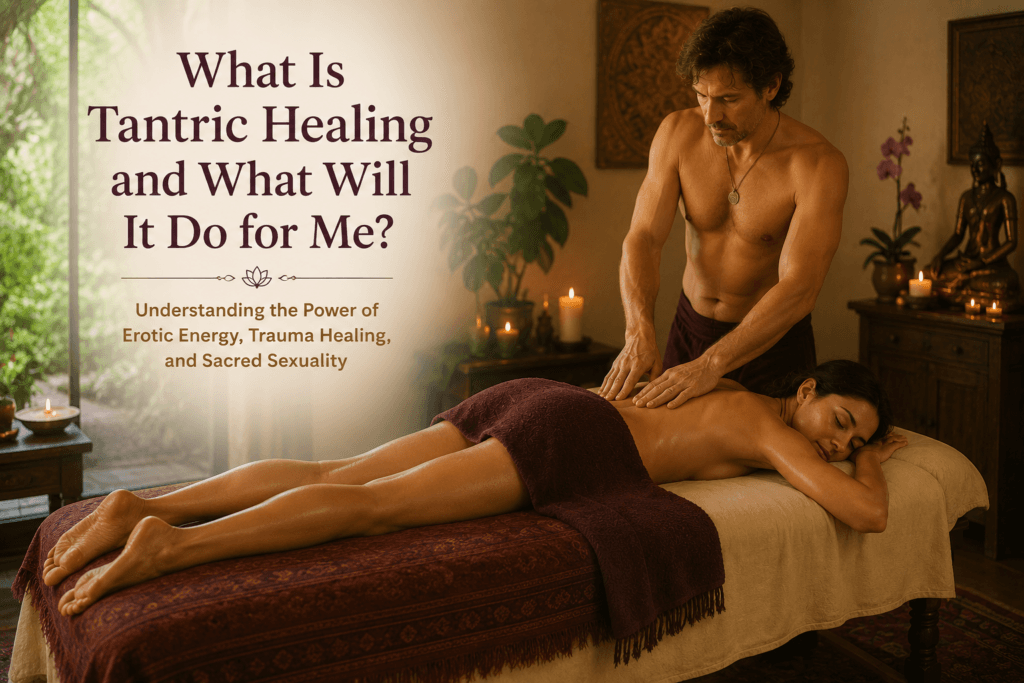
Read this related article that takes the next step into the healing application of Tantric practice. What Is Tantric Healing and What Will It Do for Me? explains what Tantric Healing is and how it works. A frank look at what what may happen in a session, and why ethical boundaries are central to this intimate form of healing work.
Leave a Reply