Not light as comfort, but light as disclosure. What we see when we stop fleeing the truth.
Hekate’s torchlight reveals what is hidden, what we have avoided, ignored, and turned away from. It discloses our shame, denial, and smallness.
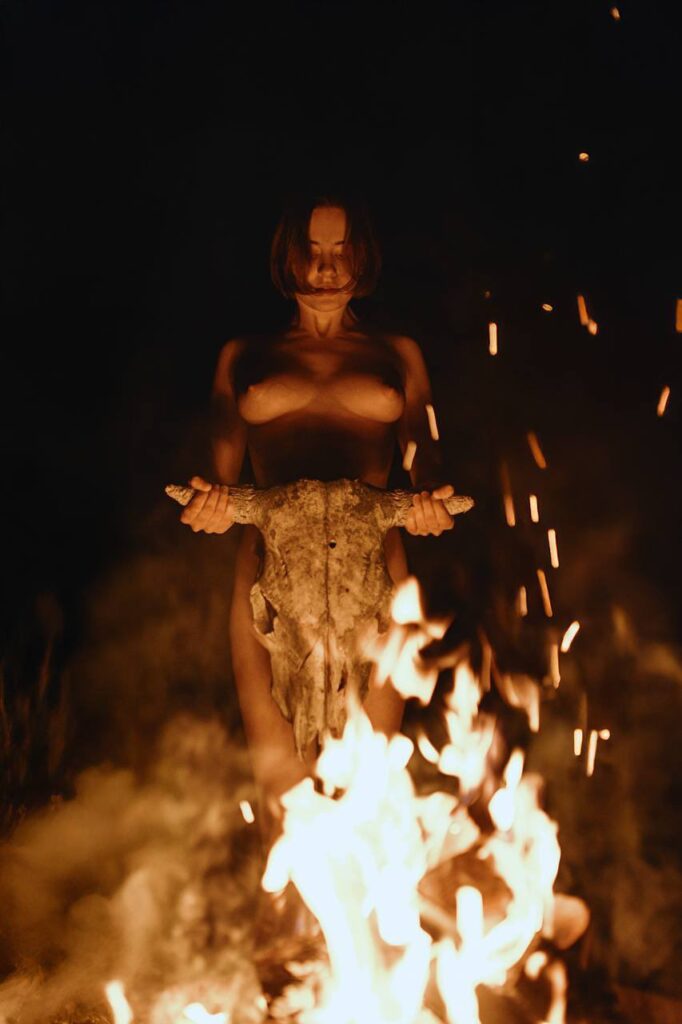
We are stripped bare, naked to the fire that illuminates our darkest shadow.
In that place, we carry nothing but our bones. Nothing the personality tries to deflect or hide can stop our unveiling.
When we stand at the crossroads in Hekate’s presence, her torchlight does not only show us the road, the gate, the choices we are facing, or the dangers outside of us. That light also turns inward. It shows the hidden chambers of the self. It reveals the motives beneath our motives.
Our smallness is revealed in the hunger to be special, the resentment of others who are seen when we are not, the need to be right, the holding of old grievances, the shame that makes us shrink from our potential, and the faux spiritual persona that hides ordinary human insecurity.
Smallness feels like a hollowness deep within. It shows up as tightness in the body, a cold defensiveness that burns like a hard winter wind against the skin. It makes the hands clench, the shoulders stoop, the breath shorten, and the forehead tighten from the pressure behind the skull.
The Torch’s Fire as Mercy, Not Punishment
The small inner self that hides in the shadows cannot stand being revealed. It cries out in its nakedness. It flits and scrambles, trying to hide again within any shadow it can find.
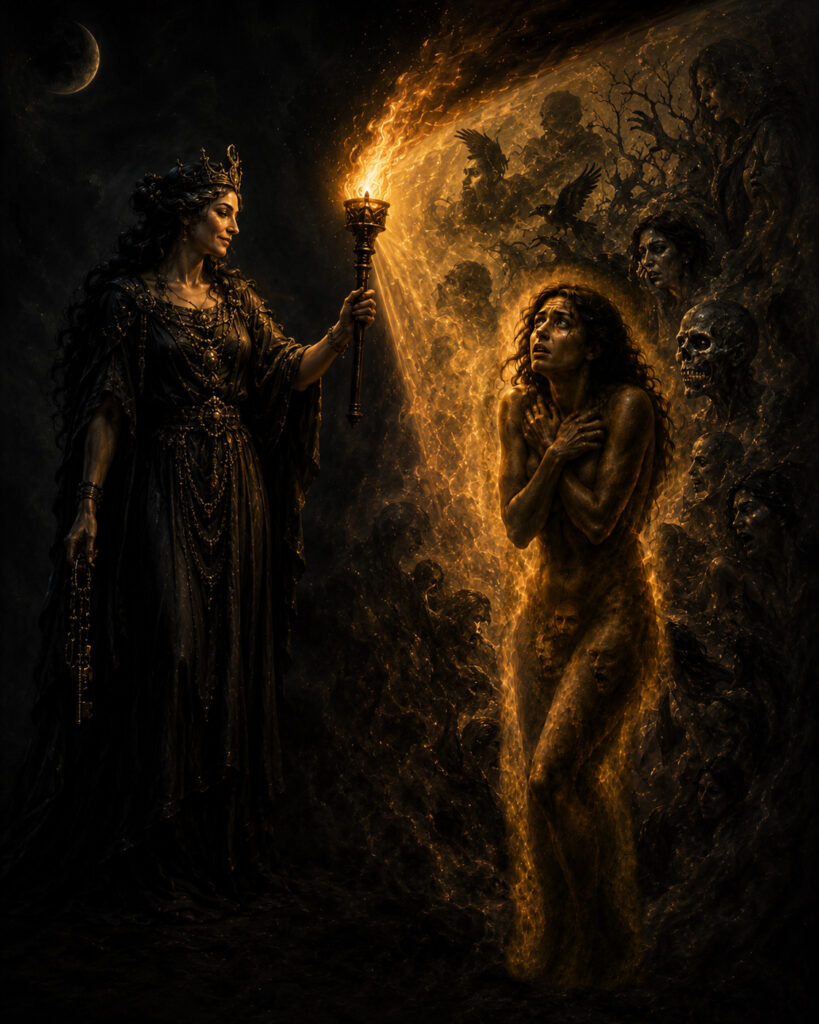
Our denied, shamed, wounded smallness fears the torch’s light. But it also needs that light to heal, be released, and become whole.
Hekate’s torchlight strips away self-illusion, but it does not despise what it reveals. It is severe because truth is severe. Yet it is also merciful, because what remains hidden cannot heal.
Inner Growth Is the Truest Path Forward
Sometimes what seems too severe to face becomes the very passage through which we transcend, heal, and grow. The small self does not strengthen us by staying hidden. It strengthens us when it is finally seen, named, and no longer allowed to rule from the dark.
When we see our smallness, we stop mistaking it for destiny.
When we see our resentment, we can stop feeding it.
When we see our fear, we can stop calling it wisdom.
When we see our shame, we can begin to separate it from our worthiness.
When we see the wound beneath our performance, we can become something truer.
Under Hekate’s torchlight, our hidden shape comes forward. Not as a monster. Not as sinfulness. But as abandoned fragments of the self that still carry the old stories of injury, shame, betrayal, and grievance.
To stand in that light is not comfortable. The first instinct is to run away, explain, accuse, collapse, or perform holiness. But the torchlight remains. It does not ask for explanation or excuse. It does not expect perfection. It asks only that we stop running from ourselves and set free what has been trying to move through us.
This is where healing begins: not in the bright claim that we are whole, but in the quieter movement where we admit that we are not.
We do not become larger by denying our smallness.
We become larger by no longer being ruled by it.
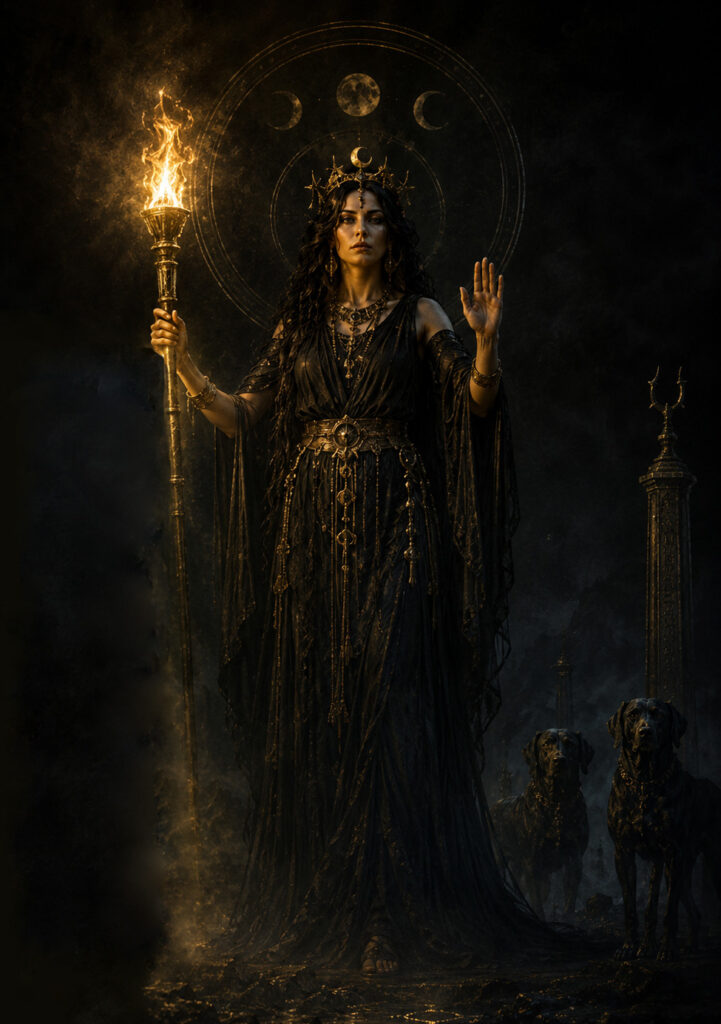
“And hear me now, traveler of the inward night:
I do not raise my torch to shame you.
I do not reveal your smallness so that you may despise yourself. I reveal it so that you may stop kneeling before it as though it were a god. I reveal it so that the wound may no longer wear the crown, so that fear may no longer speak with the voice of wisdom, so that resentment may no longer disguise itself as justice, and shame may no longer call itself truth.
What you call the small self is not your enemy. It is the frightened guardian of old pain. It is the child who learned to clench, the exile who learned to hide, the wounded one who mistook survival for sovereignty. But you were not born to live forever inside the defenses that once protected you.
Stand still beneath my flame.
Let what is false tremble. Let what is wounded speak. Let what has ruled from the dark come forward into the light, not to be punished, but to be released from its lonely kingdom.
For the soul does not become vast by pretending there is no shadow. The soul becomes vast by learning to stand in the presence of truth without fleeing. This is the beginning of real power: not the power to dominate the world, but the power to no longer be dominated by what remains unhealed within you.
When my torch turns inward, it is not the end of you.
It is the end of your exile from yourself.
And when you can look upon your own hidden places with courage, mercy, and clear sight, you will discover that the darkness was never empty. It was holding the fragments of your becoming, waiting for the fire that could finally bring them home.”
Leave a Reply