
What is the Divine Feminine and how does she show up in the world?
The Divine Feminine is the living face of sacred feminine power. She appears as goddess, mother, lover, healer, muse, witch, queen, and wild earth. She is anima: the spark of inspiration, the pull of desire, the voice that calls us toward change.
She is not only an idea. She is an inner presence. She moves through intuition, sensuality, compassion, creativity, fierce protection, and the deep wisdom of the body. She shows up wherever life asks to be honored rather than controlled.
For centuries, patriarchal culture pushed her from the altar. Her priestesses were silenced. Her sexuality was feared. Her wisdom was renamed superstition. Yet she did not disappear. She waited in dreams, in myths, in women’s bodies, in art, in the earth, and in every soul that refused to forget her.
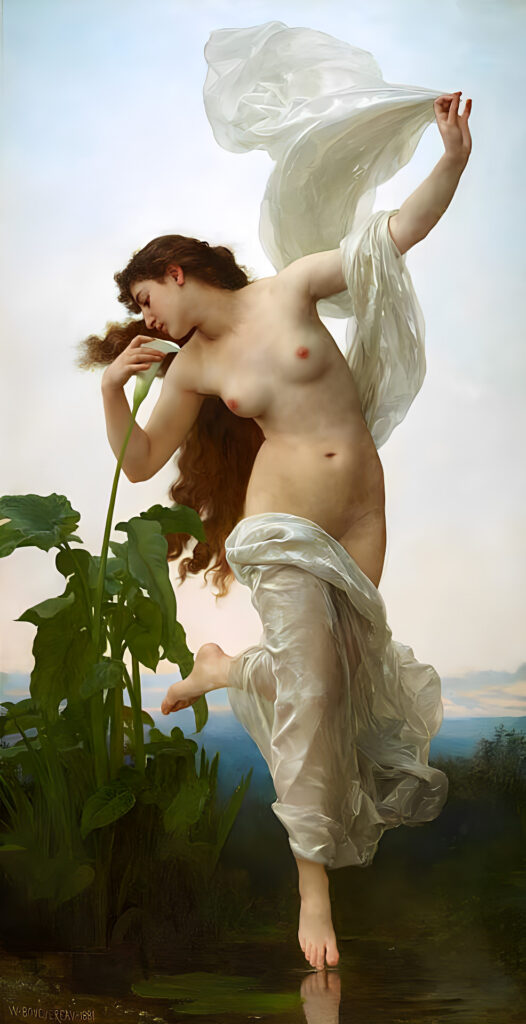
Today, the Divine Feminine is returning to conscious life. People are seeking her again in goddess traditions, earth-based spirituality, body wisdom, art, sexuality, and healing. Once again, she is being recognized as feminine power raised to sacred scale. She is tenderness with a spine. She is beauty that does not ask permission. She is the womb, the grave, the green shoot, the moonlit road, and the voice that says: remember who you are.
For centuries, many women were taught to see themselves through male ideals. Cut off from sacred feminine images, they were left with too few living models for their own divine nature.
Sacred feminine archetypes can give women images of strength, beauty, wisdom, desire, and fierceness that supports their autonomy and wholeness. They offer ways to think, act, heal, and grow that nurtures their Divine Feminine connection for spiritual and psychological balance and wellbeing.
It is not only women who benefit from nurturing the Divine Feminine. We are spirit in flesh. Each of us carries an inner weather formed by memory, longing, fear, desire, instinct, and dream. What moves within us shapes the life we build outside ourselves.
All people carry both Divine Masculine and Divine Feminine energies within the psyche. These inner powers shape our thoughts, plans, desires, goals, and ways of moving through the world. Sexuality is one place where this meeting becomes visible, but it is not the only one. A feminine-presenting woman does not carry only feminine energy. A masculine-presenting man does not carry only masculine energy. Sex, gender, and inner archetype do not always mirror one another.
Developing a harmonious relationship of “inner” masculine and feminine is one of humanity’s great tasks. It is through the conscious integration of the inner masculine and feminine that we can reach a higher, integrated, holistic consciousness. For men, it is good to contemplate and integrate the archetype qualities listed here into their inner feminine—and recognize their “anima” at work within them.
The return of the Divine Feminine is not a trend. It is a correction. It asks women to remember their sacred authority. It asks men to recover the soul they were taught to exile. It asks all of us to build a world where power and tenderness can finally sit at the same table.
Goddess, Queen, Priestess, Warrioress, Lover, Wise Woman
Many Divine Feminine archetypes could be named, but this essay centers on six: Goddess, Queen, Priestess, Warrioress, Lover, and Wise Woman. Each carries a distinct expression of sacred feminine power. Together, they offer a working map for inner balance, self-knowledge, and psycho-spiritual growth.
By giving steady attention to these archetypes, we tend what has been undernourished and give shape to what is ready to mature. The goal is not to force yourself into an ideal. The goal is to recognize where these powers already live within you, then invite them to become more conscious, more available, and more fully expressed.
Goddess
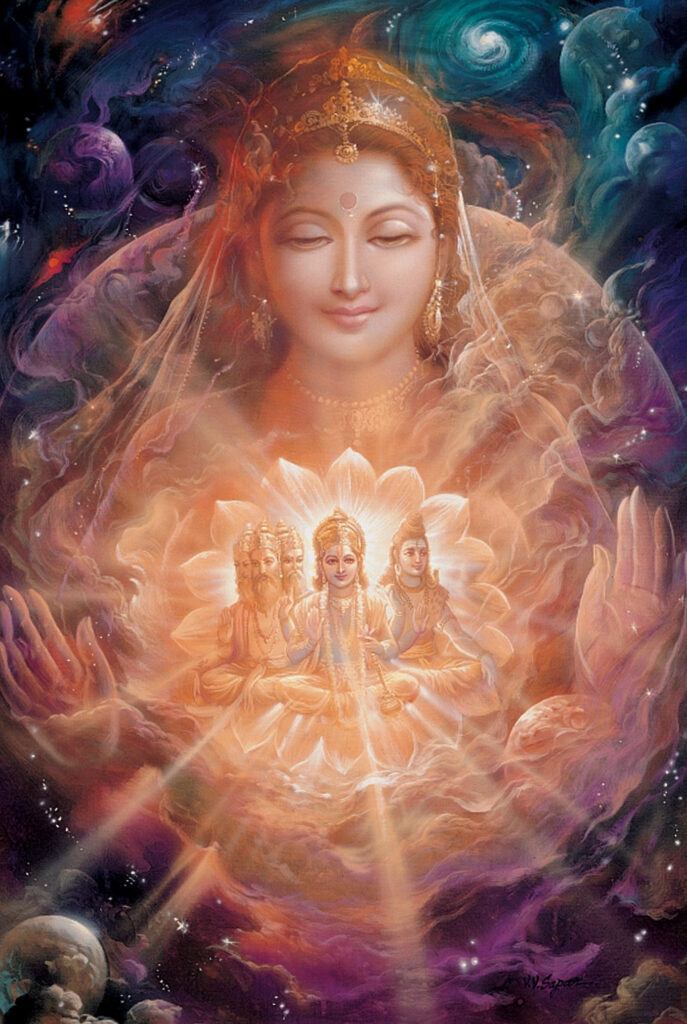
The Goddess is the archetype of sacred source. Through her, we remember that life is not only a problem to solve, but a mystery to meet with reverence. She brings us back into contact with the divine presence beneath all things: the womb of creation, the living void, the deep love from which form arises.
The Goddess carries the spark of life. She is Creatrix, origin, inspiration, and renewal. Her wisdom does not move only through reason. It comes through dream, body, intuition, image, desire, and the sudden knowing that changes the direction of a life.
Where the psyche has become stale or confined, she opens space for fresh connection and new possibility.
In her healthy expression, the Goddess draws the soul toward mystical experience and a wider sense of belonging. She awakens Eros as life force, not merely sexuality. She brings awe, devotion, creative power, and a love that reaches beyond personal preference. Her presence reminds us that the sacred is not elsewhere. It is here, moving through breath, flesh, earth, beauty, grief, and joy.
A woman standing in the fullness of her Goddess archetype carries a living radiance. She may feel spacious, intuitive, inspired, and deeply connected to life. Her presence can renew others because she is not trying to possess or control the flow of creation. She receives, blesses, imagines, and gives form. She honors her own divine essence while recognizing that same essence in others.
Queen (Mother)
The Queen is the archetype of sovereignty, stewardship, and sacred order. She governs the living space, not through domination, but through presence, care, and clear authority. Her power gathers what is scattered. She creates structure where life can grow.
As Mother, the Queen becomes the guardian of life in its most intimate form. She nourishes, protects, teaches, and prepares the young for their own becoming.
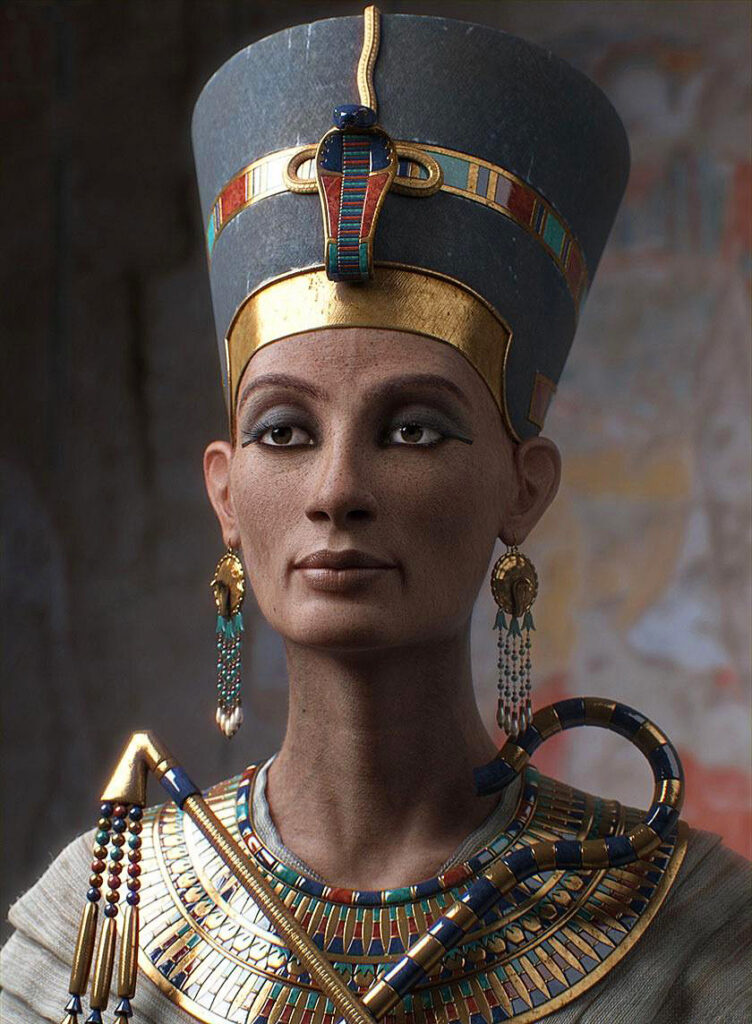
The mother bond is often the first “realm” we know: the first body, the first shelter, the first voice, the first face of love or need. Because of this, the Mother carries immense power in the psyche. She can bless, shape, steady, and sometimes wound. Her influence reaches deep.
If the Goddess is Creatrix, the Queen is the one who brings creation into form. She tends what has been born. She watches over its growth, its health, its timing, and its place in the larger order. Her sphere may be a family, a home, a community, a work of art, a vocation, a business, or any field of life placed under her care.
In her healthy expression, the Queen brings blessing, balance, fairness, abundance, and protection. She knows the worth of what she serves. She does not confuse care with self-erasure. She gives generously, but not from depletion. Her love has warmth, but it also has boundaries.
A woman does not need to be a mother to stand in the fullness of her Queen archetype. In doing so, she carries calm authority. She is concerned with the well-being of those within her care, but she does not lose herself in their needs. She is steady, generous, seasoned, and present. She rejoices in the growth and happiness of others because their flourishing does not diminish her own. Her presence says: there is room here for life to prosper.
Priestess
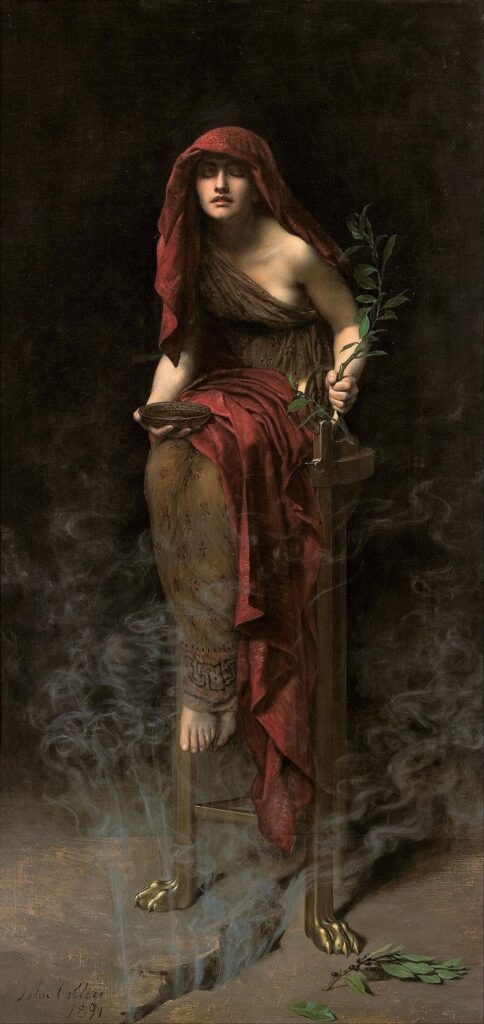
The Priestess is the archetype of the sacred threshold. She stands between the visible and the unseen, between ordinary life and the deeper powers that move beneath it. In a culture that has often dismissed women’s spiritual knowing, the Priestess remembers what was hidden, silenced, buried, or renamed as superstition.
Her domain is intuition, ritual, symbol, dream, divination, and sacred knowledge. She is drawn to the occult—what lies beneath the surface: the message inside the dream, the omen in the moment, the wound beneath the pattern, the wisdom waiting in silence. The word “occult” simply means hidden, and the Priestess is not afraid of what has been hidden. She approaches it with reverence.
The Priestess has a living relationship with mystery. She listens at the edge of the known. She does not rush to explain what should first be honored. Through prayer, ritual, trance, meditation, spellcraft, art, or deep inner attention, she opens a passage between conscious and unconscious life, between the human and the holy. She helps energy move where it has become trapped, confused, or unnamed.
A woman standing in the fullness of her Priestess archetype carries depth and spiritual composure. She may have an atmosphere of quiet power, as though some part of her is always listening inwardly. She knows how to remain centered in emotional and psychic weather that might overwhelm others. She does not deny the storm, but she does not become the storm.
The Priestess brings insight to moments of change. She can sense when something must be released, blessed, witnessed, mourned, or called into being. She is thoughtful, reflective, and attuned. Her power is not loud. It gathers in silence, then speaks when the moment is ripe.
Warrioress
The Warrioress is the archetype of sacred force. She is courage in motion, the power to protect what is vulnerable, defend what is worthy, and act when action is required. In a patriarchal culture, women’s anger, clarity, and strength have often been mocked, feared, punished, or called unfeminine. The Warrioress restores these powers to their rightful dignity.
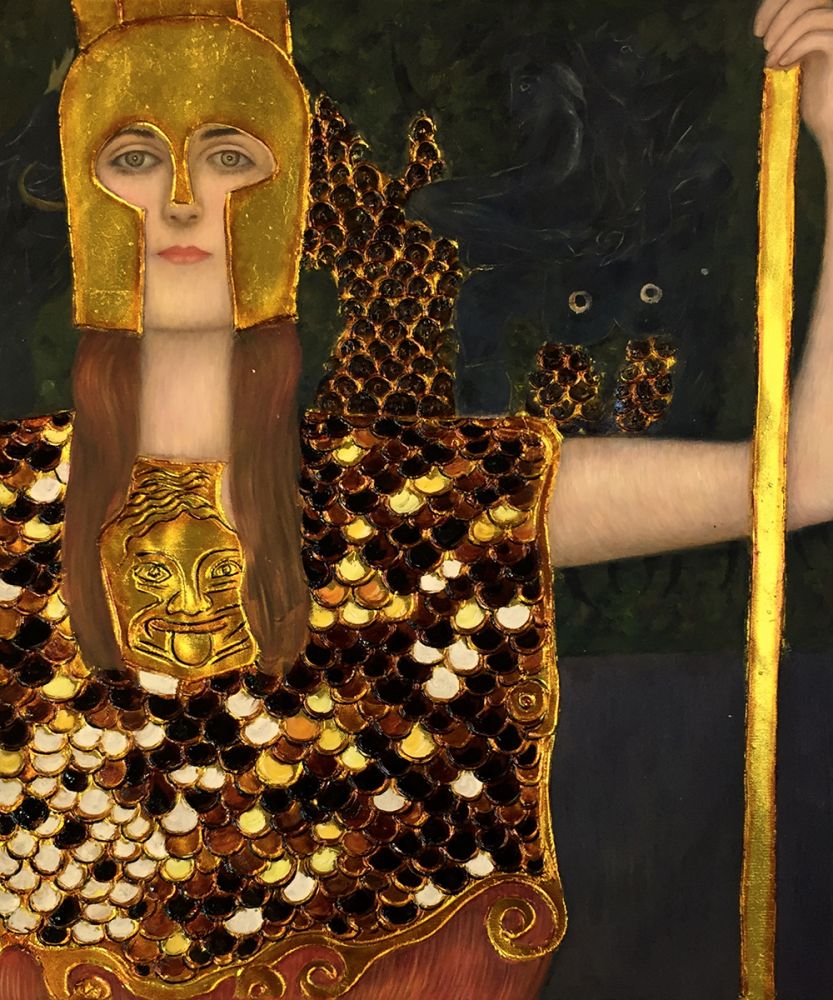
Her domain is courage, discipline, boundary, loyalty, and decisive action. She knows when to stand firm, when to move, when to refuse, and when to fight for something larger than herself. She is not reckless. She does not confuse aggression with strength. Her power is guided by purpose.
The Warrioress often rises on behalf of the other archetypes. She protects the Goddess’s sacred life force, defends the Queen’s realm of care, and stands at the Priestess’s threshold when what is holy comes under threat. Her blade is not separate from love, wisdom, or devotion. It is what appears when those powers must be defended.
The Warrioress serves the greater good, but she is not servile. She may be humble, but she is not small. She may work without fanfare, but she is not invisible to herself. Her strength comes from knowing who she is, what she values, and what she is willing to protect.
In her healthy expression, the Warrioress brings clarity to moments of pressure. She can cut through confusion, resist manipulation, and hold a line when others collapse, retreat, or appease. She has the courage to do what is right, even when it costs her comfort, approval, or ease. Her loyalty is not blind obedience. It is devotion to truth, justice, love, life, and the sacred order she has chosen to serve.
A woman standing in the fullness of her Warrioress archetype carries grounded strength. Her presence can make others feel safe because she is awake, capable, and steady. She does not need to dominate the room. She does not need to prove her power. It is already in her bearing, her eyes, her word, her refusal, her yes, and her no.
The Warrioress knows how to take her place in shared work without being ruled by ambition or competition. She respects worthy leadership, protects those entrusted to her care, and stands beside others with fierce loyalty. When needed, she becomes the blade at the gate. When the danger has passed, she lays the blade down.
Lover
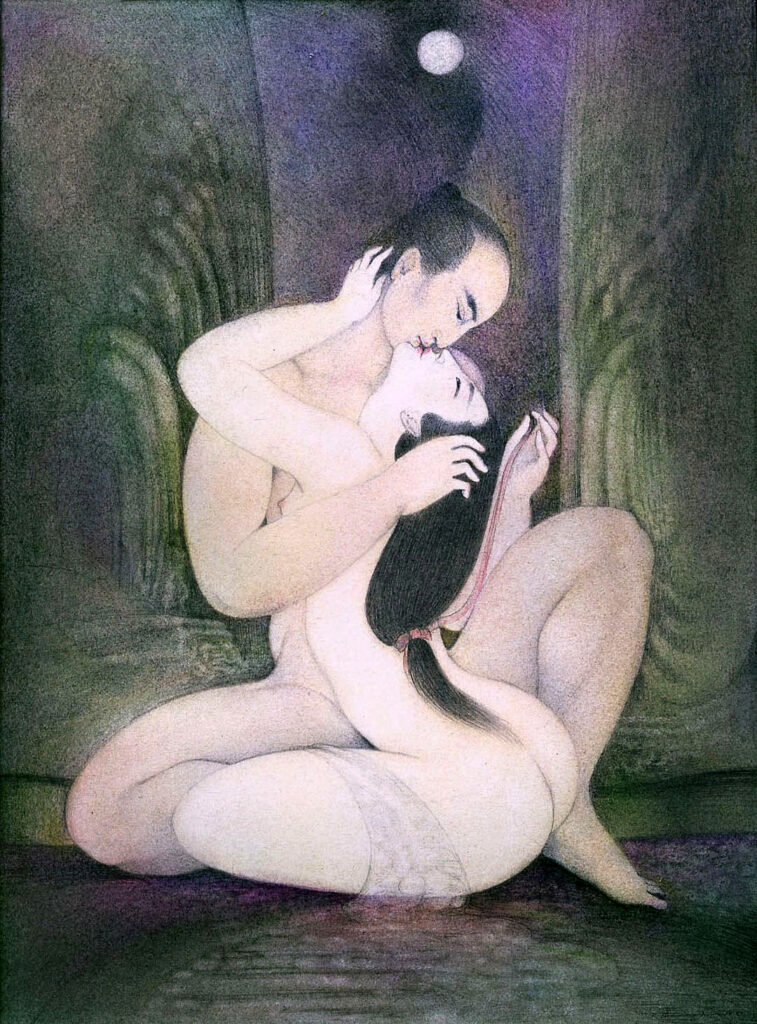
The Lover is the archetype of sacred embodiment, sensuality, beauty, pleasure, and intimate connection. She is one of the most distorted expressions of the Divine Feminine in modern culture. Too often, feminine Eros is split into the old Madonna/Whore wound: the woman placed on a pedestal beyond reach, or the woman reduced to appetite and object. The fullness of the Lover refuses both distortions.
Unbound by Richard Stodart
The Lover is not purity severed from desire, and she is not desire stripped of soul. She is the meeting of sex and spirit. She knows that Eros is more than sexual hunger. It is the holy urge to bond, touch, taste, create, join, and feel life moving through the body.
In her sacred expression, the Lover restores spirit to flesh. She teaches that the body is not an obstacle to the divine, but one of its most intimate doors. Her domain includes sensual pleasure, erotic communion, beauty, affection, play, creative expression, and the deep joy of being alive. She wakes the senses. She brings color back to the world.
The Lover is not careless indulgence. She is presence. She is the ability to feel deeply without fleeing the body, to receive pleasure without shame, and to offer affection without losing oneself. She can meet another with warmth and openness because she remains rooted in her own desire, choice, and worth.
A woman standing in the fullness of her Lover archetype carries an unmistakable aliveness. She may express it through touch, gaze, voice, movement, adornment, dance, sexuality, art, food, scent, laughter, or the simple pleasure of being fully in her body. She does not perform sensuality for approval. She embodies it.
Her beauty is not merely visual. It is felt. She notices the texture of cloth, the taste of fruit, the music in a voice, the charge in a glance, the grace of skin warmed by sun. She is drawn to connection, but not from emptiness. She seeks the meeting beyond ego: body with body, heart with heart, soul with soul.
The Lover brings joy of life into the room. She reminds us that pleasure can be sacred, that desire can be wise, and that intimacy can become a path of awakening when joined with consent, presence, and love.
Wise Woman
The Wise Woman is the archetype of lived wisdom, discernment, and right action. She has learned from experience, not only from vision or belief. She knows the medicine of time: what ripens, what fades, what returns, what must be left alone, and what must be faced.
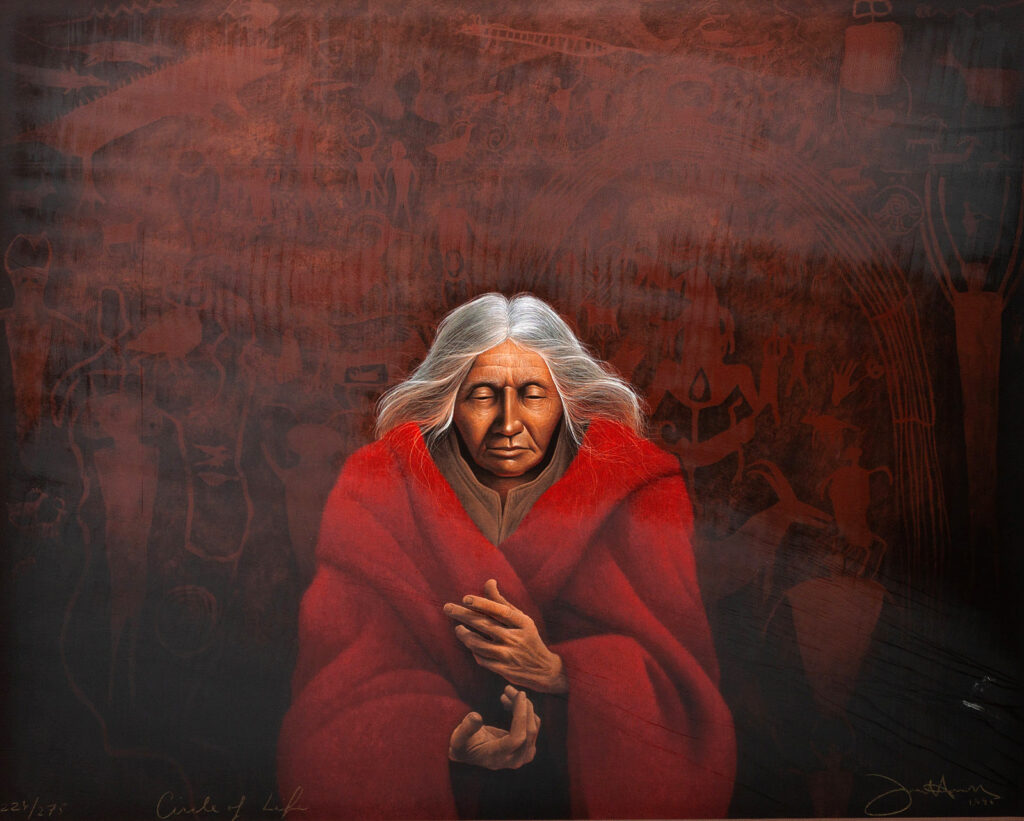
She may carry something of the shaman, healer, elder, teacher, herbalist, counselor, or grandmother. Her wisdom is spiritual, but it is also practical. She knows which root to gather, which word to speak, which silence to keep, which pattern is repeating, and which path has lost its life. She brings useful knowledge to her people.
The Wise Woman observes deeply. She listens to the body, the dream, the weather, the wound, the story, the behavior, and the unseen thread connecting them. She does not rush toward drama. She tracks what is true. Her gift is discernment: the ability to sense what is needed, what is timely, and what leads toward wholeness.
In her healthy expression, the Wise Woman places ego in service to deeper knowing. She does not need to be the center of attention. She does not give counsel to prove her wisdom. She offers what she sees when the moment calls for it, and she respects the soul path of the one who receives it.
A woman standing in the fullness of her Wise Woman archetype carries quiet authority. Her presence steadies the room because she is not easily seduced by panic, fashion, flattery, or fear. She has lived through change and knows that crisis can become initiation when met with patience, truth, and grounded care.
The Wise Woman becomes especially valuable in times of confusion, grief, transition, or need. She helps others find the next true step. Not always the easiest step. Not always the most pleasing one. The true one. Through her, wisdom becomes action, and action becomes aligned with soul.
A Suggested Practice
To work with these archetypes, begin with contemplation rather than critique.
First, ask what the fullness of each archetype means to you. Not as an abstract idea, but in your own body and life. What does the Queen feel like when she is whole? How does the Lover move when she is free? What does the Wise Woman know that you are ready to trust?
Then look for where that archetype already lives in you. Start with evidence of presence. Don’t begin by hunting for lack, failure, or deficiency. Look for what you are already doing, even in small ways. A single honest moment of self-command may reveal the Queen. A moment of fierce boundary-setting may reveal the Warrioress. A quiet act of blessing may reveal the Priestess.
As you name what is already present, your sight adjusts. It is like standing in a dark room long enough for your sight to adjust and for shapes to emerge. You begin to see what had been there all along. The more attention you give an archetype, the more it comes forward in awareness, choice, gesture, and behavior. This is not forced performance. It is recognition. It is an inner flowering.
Contemplation does two things at once. It strengthens what has already taken root, and it gives new growth a place to rise. You see the archetype where it already lives, and you invite it to take form where it has been dormant.
When an aspect of an archetype feels new, don’t rush to act it out. First, imagine it. Let yourself feel how it would be to think with that quality, speak from it, move from it, and choose from it. Then watch for ordinary moments where that new pattern can be lived: a conversation, a boundary, a creative act, a refusal, a blessing. With practice, the archetype becomes less an idea you admire and more a living power you can embody.
Originally scribed circa 2013-2014
Leave a Reply