An Evolution in Masculine Consciousness
Revised and updated July, 2026
In my companion essay, Evolving the Masculine, I explored the struggle many men face as inherited forms of masculinity lose their authority. This essay looks more closely at one expression of that change: the emergence of the Dionysian Male.
The Dionysian Male represents a masculinity that does not reject structure, reason, or discipline, but includes feeling, embodiment, instinct, anima, and the feminine psyche within a more complete male consciousness.
Revised and expanded July 2026
Some men feel caught between their inner reality and the narrow role society has given them. They may feel deeply, relate easily to women, carry artistic or healing gifts, or express qualities that others label feminine. Yet they remain men and experience themselves as masculine. The conflict arises not from who they are, but from the pressure to fit a patriarchal image of what a “real man” should be.
The Dionysian Male archetype offers another way to understand these men and their place in the continuing evolution of masculine consciousness.
Recognizing the Dionysian Male
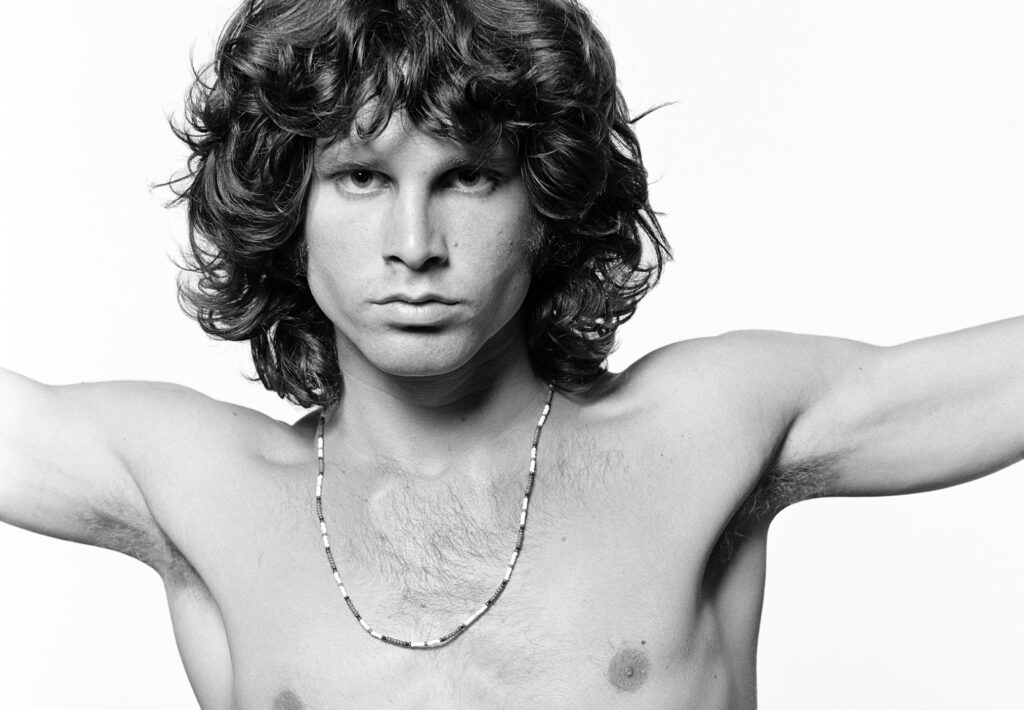
The Dionysian Male archetype can be seen, in different ways, in public figures such as Jim Morrison, Michael Jackson, David Bowie, and Russell Brand. I do not offer these men as models of ideal character, nor does identifying an archetypal pattern excuse their faults, contradictions, or harmful behavior. Public figures often embody an archetype unevenly.
What matters here is the visible pattern: a masculine identity that also carries feminine, androgynous, emotional, artistic, sensual, or socially unconventional qualities.
While these men present themselves as masculine, they also express strong feminine qualities that may give their appearance, manner, or personality an androgynous character. The contrast becomes clearer when they are placed beside men who closely conform to conventional patriarchal ideals of masculine presentation. These differing expressions of masculinity point toward a change in male consciousness.
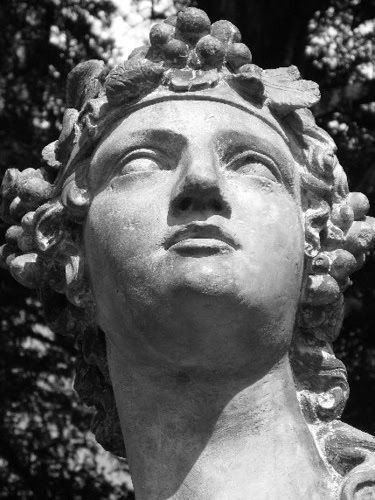
To understand that contrast more deeply, we can look to two figures from the Hellenic pantheon: Apollo and Dionysus.
Apollo and Dionysus
Apollo and Dionysus represent two distinct forms of masculine consciousness.
The Apollonian man is a straight arrow. He is circumspect, disciplined, careful, and reliable. He values reason, clarity, structure, self-control, and established order. Within patriarchal culture, Apollo readily becomes its favored son and hero.
To the strictly Apollonian man, Dionysus may appear slightly mad, impulsive, unstable, strange, or ruled by archaic instincts. Dionysus enters places that Apollo would rather illuminate, classify, and control.
These gods represent two forms of masculinity present in a culture moving away from patriarchal dominance and toward greater equality. Yet the Dionysian Male does not simply reject Apollo. His development comes through inclusion.
The psychologically developed Dionysian Male is not an expression of Dionysus alone. He emerges through a synthesis in which the Apollonian capacities for structure, logic, discipline, reliability, and conscious judgment remain available, while embodied feeling, feminine consciousness, instinct, sensuality, emotional depth, and access to the unconscious are brought into masculine life and given more weight and value than previously held by a patriarchal system.
The result is not a fixed balance of equal parts. A psychologically integrated man does not need to remain suspended at a midpoint between Apollo and Dionysus. He draws upon either mode as circumstances require and as his authentic nature seeks expression. He may act with Apollonian precision in one moment and Dionysian feeling in the next. His freedom and fullness lies in having access to both.
Solar and Chthonic Masculinity
Psychologically, Apollo represents what Eugene Monick identifies in Phallos: Sacred Image of the Masculine as solar phallos: the masculine principle associated with light, consciousness, order, regularity, and rational direction.
Dionysus carries a different masculine energy. He is linked to the chthonic, meaning the earthbound, bodily, instinctual, underworld depths of life. His intrinsic connection with the feminine adds emotion with intensity. He feels rather than merely talks about feeling.
To an intellectual Apollonian man who has separated himself from his body and emotions, such intensity may feel unbearable. To a Dionysian man, it is part of being alive: the natural consequence of spirit and flesh experienced together.
Dionysus was called the “womanly one,” the “womanly stranger,” and the “man-womanish.” Women encircled his experience: Ariadne, his wife; Semele, his mother; Aphrodite, his consort; and the nymphs and maenads who followed him. Women expressed themselves with wild excitement during his rituals and festivals.
The male figures in his stories included satyrs, centaurs, and Sileni, lustful expressions of masculinity that mirrored the ithyphallic, or erect-phallus, images of the god.
Dionysus therefore represents the carnal underworld and the shadow connection to a man’s unimproved nature: the primal depth that civilized consciousness tries to order but can never fully erase. Here, chthonic masculine and chthonic feminine meet in forms that the Apollonian mind may experience as irrational, ecstatic, or orgiastic.
“The slightly mad qualities of Dionysus and his flock belong to psychic reality, and room must be made for them, whether or not Apollonians enjoy the coexistence. The fusion and confusion of masculine and feminine in the psychoid unconscious is expressed in the archetypal image of Dionysus.”
—Eugene Monick, Phallos: Sacred Image of the Masculine
The psychoid dimension lies near the deep meeting place of psyche, instinct, and body, before experience has been divided into neat categories of mental and physical. Dionysian wisdom arises from this embodied source.
An Embodied Masculine Consciousness
Dionysian wisdom cannot be fully grasped through Apollonian thought alone. It comes through lived experience.
Apollonian knowledge tends toward the intellectual. It observes, names, measures, and explains. When cut off from Dionysus, it may become disembodied, detached from emotion, and suspicious of instinct. It can describe grief without weeping, desire without trembling, and love without surrendering control.
Dionysian consciousness enters the experience itself.
It feels the heat in the chest, the tightening of the throat, the movement of desire, the ache of loss, and the animal vitality beneath civilized restraint. It knows through contact with life rather than through observation alone.
Dionysus represents a transpersonal experience that carries a man beyond the limits of personal ego and stoic pragmatism. It returns him to embodied reality and his natural place within life.
Only by allowing this experience can a man move beyond intellectual conformity and encounter the living psychoid reality in which body and psyche remain joined.
The Dionysian Male contains both masculine and feminine qualities within himself. Their coexistence allows his unconscious and conscious life to meet in a more complete expression of being male.
This is psychological and archetypal androgyny. It does not mean that a man pretends to be a woman, lacks a male identity, or feels uncertain about his sexual orientation. It means he no longer needs to exile qualities that his culture has labeled feminine. He recognizes them as part of his own psyche.
Whether heterosexual, homosexual, or bisexual, he knows himself as a man. Yet he can share emotional and psychological ground with women in ways that a strictly patriarchal Apollonian man often cannot.
“The integration of chthonic phallos (with its overtones of the feminine) and solar phallos is the task of consciousness, a process inherent in the Dionysian image.”
—Eugene Monick, Phallos: Sacred Image of the Masculine
Beyond Patriarchal Masculinity
The brotherhood of men is changing as men shed inherited stereotypes of masculinity.
Patriarchal culture has claimed linear thought, authority, control, regularity, and emotional restraint as the proper marks of masculinity. These capacities can be useful, but they do not belong to patriarchy, nor do they require the subordination of women or the suppression of the feminine. They become harmful when treated as the whole of masculinity and used to justify hierarchy, domination, or shame.
Dionysian masculinity does not discard Apollonian consciousness. It places it within a larger psychological life.
It adds the resources of the unconscious to the conscious personality. It gives the man access to feeling, relationship, intuition, sensuality, instinct, creativity, and the body. This wider range can support a more humane way of relating to both men and women.
The Dionysian Male is therefore not merely a different kind of man. He represents a more developed form of masculine consciousness because his masculinity includes more of the psyche.
This does not mean that every emotionally expressive, artistic, or androgynous man has achieved psychological maturity. Archetypal expression alone does not guarantee ethical character. Conscious integration requires self-knowledge, responsibility, and an honest relationship with one’s shadow.
“New Consciousness, the movement beyond patriarchy, no longer requires diminishment of the feminine for phallic establishment. Masculinity finds its center as inner phallic reality. This, together with the anima, constitutes a restoration of wholeness in a male.”
—Eugene Monick, Phallos: Sacred Image of the Masculine
The anima, in classical Jungian psychology, is the archetypal feminine dimension within the male psyche. When unconscious and rejected, it may be projected onto women, who are then idealized, feared, desired, controlled, or blamed for feelings the man cannot recognize within himself.
When the anima is consciously included in a man’s psyche, she can open him to greater feeling, relationship, imagination, receptivity, and a deeper connection with his own inner life.
The Dionysian Male is psychoid-androgynous. He consciously includes within his male identity qualities traditionally assigned to the opposite sex rather than repressing, disowning, or projecting them onto women.
“An androgynous person does not pretend to be a member of the opposite sex. An androgynous male will not repress his feminine characteristics, however much he may, at times, decide to suppress them. He knows that they are part of him, he has worked on his ego resistance to integrating them. He knows there will be times when he will choose to think and perhaps behave according to the ‘her’ within him.”
—Eugene Monick, Phallos: Sacred Image of the Masculine
A Synthesis of Masculine Possibilities
Dionysus represents the possibility of a masculine expression that includes both chthonic phallos, with its feminine and embodied aspects, and Apollonian solar phallos.
Their synthesis does not require an equal balance between the two. It gives a man access to both, allowing structure or spontaneity, reason or feeling, restraint or intensity to arise according to circumstance and authentic need.
This flexibility is not weakness or indecision. It is the strength of a consciousness that no longer needs to defend itself against parts of its own nature.
To the extent that this integration occurs, a man moves closer to expressing unus mundus: the totality of masculinity in integrated expression not burdened by patriarchal bias and limitation.
The more fully Dionysus is accepted within a man’s personality, the more completely he may express the benevolent and life-giving potential of the divine masculine in its beatific totality.
Men Close to the Feminine Archetype
The following passage from John A. Sanford’s The Invisible Partners describes men who live close to the feminine archetype. These men may feel deeply, carry artistic or healing gifts, and seek direct experience of the feminine without losing their male identity.
“In addition to men with homoerotic tendency or homosexual nature there are other, heterosexual men who also lie very close to the feminine archetype. These men have succeeded in making a male ego identification, and their sexual feelings and love needs are directed toward women, but it is as though the feminine archetype is unusually numinous to them and looks large in their psychology. They too are often sensitive men with healing gifts or artistic inclinations . . . [with a] sensitive and differentiated personality. With these men, the Dr. Zhivagos of our society, there seems to be a need to be initiated into the meaning and mystery of the feminine on all of its levels. Such men are called on to understand women, to understand the feminine in themselves, to recognize and give importance to feminine values in life, and to have an immediate and personal experience as it were, of the Great Goddess. Such an initiation into the meaning of the feminine does not feminize these men, for in understanding the feminine they also differentiated the feminine within themselves. Their ego remains masculine, but is transformed by this initiation into a more differentiated state of consciousness. These cases suggest that the psychological influence of the anima is greater in some men than in others. Because of her numinosity, the anima exerts a profound influence on the psychology of certain men. Fating them to lead a special kind of life that requires them to acquire unusual self-knowledge.”
—John A. Sanford, The Invisible Partners, p. 100
You Are Not the Only One
You may recognize yourself in these words.
Perhaps you have never felt at ease with the narrow masculine role offered to you. You may know yourself as a man while also feeling tenderness, beauty, intuition, emotional depth, or an affinity with women and the feminine. You may have spent years wondering whether these qualities weaken your masculinity or make you less of a man.
They do not.
Your struggle may arise because your inner life contains more than the patriarchal model permits. The shame does not prove that something is wrong with you. It may show where social expectations have pressed against the truth of who you are.
Other men live within this same tension. Some have found their way toward a masculinity that does not require the rejection of feeling, the body, women, or the feminine within themselves.
The Dionysian path is not an escape from masculinity. It is an expansion of it.
For a broader discussion of this change in male identity, read my related essay, Evolving the Masculine. It looks at the inner conflict many men face as they release inherited roles and discover a masculinity that feels honest, grounded, and truly their own.
If you are struggling with your masculinity, your inner feminine nature, or the pressure to conform to someone else’s definition of a “real man,” you do not have to work through it alone. If you would like help sorting through these feelings, shedding shame, and developing a more secure sense of yourself, you may contact me for coaching through the Contact Sunyata link in the top menu.
Works Cited
Monick, Eugene. Phallos: Sacred Image of the Masculine. Inner City Books, 1987.
Sanford, John A. The Invisible Partners: How the Male and Female in Each of Us Affects Our Relationships. Paulist Press, 1980.
Further Reading
Hillman, James. Anima: An Anatomy of a Personified Notion. Spring Publications, 1985.
Jung, C. G. Two Essays on Analytical Psychology. 2nd ed., Collected Works of C. G. Jung, vol. 7, Princeton University Press, 1966.
Kerényi, Carl. Dionysos: Archetypal Image of Indestructible Life. Princeton University Press, 1976.
Nietzsche, Friedrich. The Birth of Tragedy and The Case of Wagner. Translated by Walter Kaufmann, Vintage Books, 1967.
See Also: The Divine Masculine
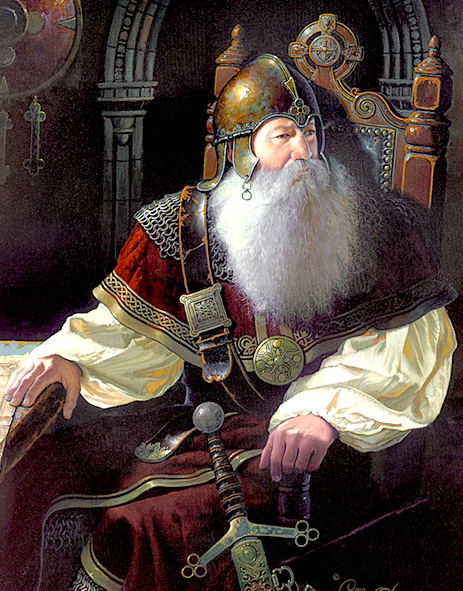
The Divine Masculine explores a wider range of masculine archetypes and the qualities they bring into conscious male identity. Read it alongside this essay for a broader view of how masculine strength, wisdom, feeling, purpose, and inner authority can develop beyond patriarchal stereotypes.
Leave a Reply