
The Inner Child, Anima, and the Path to Mature Manhood
Revised and updated July, 2026

An evolved masculine is generally understood as a spiritually mature and awakened expression of manhood. It carries wisdom, presence, heart, discernment, and right-relationship with women, with other men, with the world, and with oneself.
Evolving the masculine is not about becoming harder, more dominant, or more impressive. It is the inner work of becoming more whole. A man enters this work to become the fullest version of himself he is capable of becoming, not only in private, but through his actions, relationships, creative force, and the legacy he leaves behind.
The masculine principle has certain attributes, as does the feminine principle. These attributes give a person a way to see where strength is present, where it is missing, and where it has become distorted by fear, pain, pride, or shame.
Masculine attributes also serve women, just as feminine attributes also serve men. A woman may benefit greatly by strengthening and cultivating her inner masculine, just as a man may benefit by relating more consciously with his inner feminine. In this sense, masculine and feminine are not merely social roles. They are living psychic principles within us.
Whether you are a man or a woman, your experience of the masculine within you carries certain inner figures that must be known, engaged, and brought into conscious relationship. Without that relationship, the shadow masculine tends to act through us before we can recognize what has taken hold.
For a man, two inner figures are especially important in the evolution of masculinity: the Inner Child, often appearing as the Hurt Little Boy, and the Anima, the inner feminine.
Masculinity in a Time of Confusion
Men today are often caught between two false choices.
One version of masculinity tells men to become harder, colder, richer, more sexually dominant, and less emotionally available. This is the world of the false alpha: the man who mistakes control for strength, conquest for confidence, and contempt for power. He may appear certain, but beneath that certainty there is often shame, fear, and a deep hunger for approval.
The other false choice tells men to soften themselves into harmlessness, as if masculinity itself is the problem. This creates a collapsed masculinity, one that confuses sensitivity with self-erasure. A man in this state may become agreeable, passive, resentful, and unsure how to carry his own force.
Neither path creates mature men.
One path produces domination. The other produces weakness disguised as virtue. The evolved masculine must find a third way: grounded power with emotional depth, strength without cruelty, tenderness without collapse, and desire without entitlement.
Some feminist critique has rightly named the harm caused by domination, sexual entitlement, male violence, and emotional neglect. Men need to hear that truth. At the same time, some men receive the wider cultural message as though masculinity itself is shameful or dangerous. Into that wound step online “alpha male” teachers and manosphere influencers, offering certainty, blame, sexual strategy, money worship, dominance, and resentment as medicine for male pain.
Recent studies help explain why these messages find an audience. Equimundo’s State of American Men reports describe many men as living with confusion, isolation, economic pressure, and uncertainty around purpose, relationships, identity, and manhood. Ofcom’s 2025 research on the manosphere found that men may first be drawn through humor, debate, self-improvement, fitness, and personal agency, while socially isolated men appear more vulnerable to closed online communities that promote harmful views.
This matters because many men are not merely looking for power. They are looking for a map.
A boy who was never guided into healthy manhood may become a man who borrows an identity from whoever speaks with the most confidence. A wounded man may mistake contempt for strength because contempt feels safer than grief. A lonely man may choose ideology over intimacy because ideology never asks him to be vulnerable.
The work of evolving the masculine begins when a man stops asking the outer world to define him and turns toward the inner figures who have been shaping him from beneath the surface.
The Inner Community of the Psyche
We are not as singular inside as we often imagine.
A human being carries many inner parts: younger selves, protectors, wounded figures, exiled feelings, inherited family patterns, inner masculine and feminine presences, and archetypal forces that shape perception and behavior. Some of these parts are mature and helpful. Others are frozen in old pain. Some still believe the danger of childhood is happening now, even when the adult life around them has changed.
Inner Child Healing, Parts Work, Internal Family Systems, Family Constellations, Jungian Active Imagination, and soul-retrieval work all point toward a similar truth: healing often begins when we stop treating these inner figures as enemies and learn how to relate to them. Internal Family Systems, for example, describes the psyche as an internal system of parts and emphasizes the role of the Self as a calm inner leader that can restore balance and harmony among them.
This does not mean every method is the same. Each has its own language, structure, and purpose. But they share a useful recognition: parts of us can hold memory, fear, rage, shame, loyalty, grief, instinct, and longing. These parts may seem irrational to the adult mind because they were formed in earlier states of overwhelm.
A man who wants to evolve his masculinity must learn to notice when a younger or wounded part has taken over. He may feel it in his chest, jaw, belly, hands, or breath before he has words for it. The body knows. The throat tightens. The face hardens. The stomach drops. The voice changes. Suddenly, he is not responding to the woman in front of him, the friend in front of him, or the moment in front of him. He is responding from a younger place that still expects rejection, humiliation, abandonment, or attack.
This is why inner work matters.
A man cannot simply think his way into mature masculinity. He must learn to turn inward, listen, witness, and enter relationship with the parts of himself that still carry old pain and distorted power.
Your Inner Child
We all carry an Inner Child aspect within the psyche. In a healthy state, the Inner Child is a source of wonder, curiosity, play, openness, and delight. It prompts us to explore life with freshness. It brings laughter, spontaneity, innocence, and creative fire.
For men, the wounded Inner Child often appears as the Hurt Little Boy.
When the Hurt Little Boy takes over, a man may feel too much, too fast. He may become enraged beyond what the situation calls for. He may withdraw, sulk, attack, punish, compete, blame, or act out in ways that embarrass him later. His anger may be directed toward the women in his life, toward women in general, toward other men, toward authority, or toward himself.
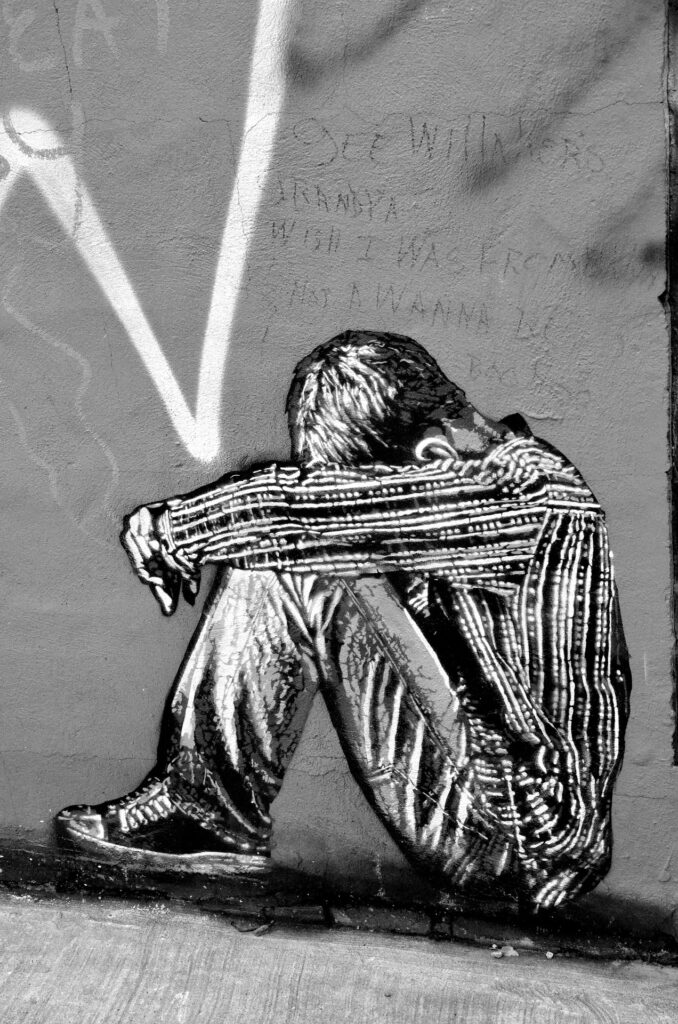
The Hurt Little Boy often comes from early psychic imprints, especially adverse childhood experiences where masculinity was shown in its shadow form. This may include an angry or abusive father, a tormenting older brother, bullying male relatives, or other men who used power to frighten, shame, dominate, or control the child.
He may also be shaped by the “mother image,” meaning the way female caregivers responded to the masculine figures in the family and to masculinity itself. A boy may grow up with a mother who is detached, critical, emotionally smothering, frightened of men, resentful toward men, or dependent on male approval. He may absorb her fear, contempt, longing, or confusion. He may learn that masculinity is dangerous, shameful, absent, weak, violent, or unwanted.
These early conditions can produce insecurity, fear, separation, and a contracted sense of self. The boy learns how to survive, but not necessarily how to grow.
The Hurt Little Boy is not bad. He is wounded. He carries the part of the man that did not receive enough safety, protection, affection, initiation, respect, or truthful guidance. He may carry rage because rage gave him a sense of power when he felt helpless. He may carry mistrust because mistrust once helped him survive disappointment. He may carry shame because shame was handed to him before he had the strength to refuse it.
When the Hurt Little Boy heals and begins to return to wholeness, something remarkable occurs. His life-force comes back. What once appeared as tantrum, defiance, fear, or rage may slowly reveal itself as vitality. The man begins to feel enthusiasm again. He may feel more alive in his goals, creativity, sexuality, relationships, and sense of purpose. His energy is no longer trapped in defense. It becomes available for life.
The Hurt Little Boy can become the Exuberant Youth.
This is not regression. It is restoration.
The boy inside the man is not meant to rule the psyche. He is meant to belong to it.
Introspection and Integration
To begin healing the Hurt Little Boy, a man must learn to observe his thoughts, feelings, reactions, and bodily signals. He must become willing to consider that some parts of him hold old memories and strong conclusions about life.
The Hurt Little Boy has his own story. He has evidence. He has grievances. He has fear. He may have an agenda that appears to be at odds with the man’s adult values and goals. He may say, “Never trust her.” “Do not let anyone see your weakness.” “Strike first.” “Leave before you are left.” “Make them pay.” “Do not need anyone.”
These inner commands are not random. They often come from earlier pain.
Split-off parts of the psyche can form when a person experiences physical, emotional, mental, sexual, or spiritual overwhelm. Some wounds are obvious: violence, sexual abuse, assault, humiliation, abandonment, or betrayal. Other wounds may be less visible but still deeply felt by the child: unwanted touch, extreme tickling, invasive medical experiences, harsh discipline, emotional neglect, family secrecy, shaming around the body, or affection that did not respect the child’s boundaries.
The psyche does not measure pain by adult logic. It records what the child could not process.
Without inner work, counseling, trauma care, or some form of conscious integration, these parts may remain isolated inside the psyche. They live in the prison of their own moment. They do not know that time has passed. They do not know the man has grown. They still expect the old danger to return.
Relating to the Hurt Little Boy requires patience and honesty. A man must learn to notice when he is activated. He must recognize the surge before it becomes action. He must feel the heat in the chest, the clenched jaw, the restless hands, the hard breath, the urge to defend or disappear. He must pause long enough to ask, “Who in me is reacting right now?”
This question changes the field.
The first and most important step is recognition. The more the Hurt Little Boy is seen, the less unconsciously he can possess the man’s behavior. The man remains more at choice. He can still feel anger, fear, hurt, and grief, but he does not have to let those feelings drive the entire vehicle.
Meditation, introspection, journaling, therapy, somatic work, Active Imagination, and soul-retrieval journey work can all help a man meet and dialogue with his Inner Child. Robert A. Johnson’s work on inner dialogue and Active Imagination is especially useful here because it treats inner figures as meaningful presences within the psyche rather than mere thoughts to dismiss.
The goal is not to silence the Hurt Little Boy. The goal is to hear him without letting him rule.
When he feels seen and heard, his fear begins to soften. His rage begins to deflate. His isolation begins to end. He can be restored to the inner community of the psyche, where he can heal, mature, and grow into a better relationship with the adult man.
At this point, his gifts return: vibrancy, play, excitement, male Eros, courage, creative movement, joy, and grounded power. The man becomes less reactive and more alive.
A Man’s Anima
The Anima was named by Carl Jung as the contrasexual aspect within the psyche of a man. The Animus is the corresponding inner masculine aspect within the psyche of a woman.
The Anima is a man’s inner feminine. She is not a costume, a weakness, or a threat to his masculinity. She is a living psychic presence that connects him to feeling, intuition, beauty, receptivity, relatedness, creativity, and inner knowing.
Some men fear that opening to the Anima will make them less masculine. This is a misunderstanding. A man who relates consciously with his inner feminine does not become less of a man. He becomes less split.
A man who refuses his Anima may still be powerful, but his power tends to become dry, rigid, controlling, or emotionally blind. He may try to make women carry his own disowned feeling life. He may demand softness from women while despising softness in himself. He may crave intimacy while fearing the vulnerability required to receive it.
This creates suffering in his relationships.
The more a man denies his inner feminine, the more likely he is to project her onto women. He may idealize women, resent them, fear them, worship them, control them, pursue them, or blame them. But he does not truly relate to them, because he has not learned to relate to the feminine within himself.
Men are rarely taught how to connect with the inner feminine. Many are taught to mock her, suppress her, sexualize her, distrust her, or leave her entirely to women. Yet unless a man can enter conscious relationship with his Anima, he remains divided against himself. That division distorts his relationships with women.
Learning to relate to the inner feminine directly affects a man’s ability to relate to the outer feminine: the women in his life.

A man can begin relating to his Anima by slowing down enough to recognize her as an authentic inner guidance system already operating within him. She is not random emotion or distraction, but a source of intuitive intelligence that helps him orient toward truth, connection, and deeper alignment. Instead of dismissing her signals as weakness or irrational feeling, he can turn toward them with respect and curiosity. He might ask, “What are you guiding me toward?” “What truth am I being asked to feel?” “Where have I ignored my own knowing?”
Journaling, meditation, dream work, Active Imagination, art, music, time in nature, and honest conversation with trusted women can all help him strengthen this inner relationship. The work is not to obey every passing mood, but to listen for the deeper coherence beneath it. Over time, he learns to distinguish between projection onto women and the steady, grounded guidance of the feminine within himself.
The denied Anima does not disappear. She seeks recognition. If the man refuses to hear her quietly, she may press harder. She may appear through mood, longing, fantasy, romantic obsession, creative unrest, erotic confusion, dreams, sudden grief, or disruptive life events that shake the man out of his hardened self-image.
This is not punishment. It is the psyche seeking wholeness.
When a man achieves a more integrated relationship with his inner feminine, the disruptive pressure often begins to soften. He no longer needs to chase the feminine outside himself as though it holds the missing half of his soul. He begins to receive her within.
Her gifts then become available: inspiration, creativity, intuitive guidance, tenderness, symbolic insight, emotional intelligence, and the ability to move with life rather than constantly trying to dominate it.
To be in right-relationship with a woman, a man must be able to relate. To relate, he must know his own feelings without being ruled by them. He must be able to understand and respect her feelings as sovereign, real, and important. He must stop asking women to carry the inner work he refuses to do.
When a man comes into deeper relationship with his Anima, his relationships with women can change profoundly. He may begin to understand something of the mystery of Woman by relating to the “woman” inside himself. He becomes less combative, less needy, less defensive, and less dependent on women to validate his manhood.
He can meet women more cleanly.
Not as mother.
Not as enemy.
Not as prize.
Not as servant.
Not as savior.
As another sovereign being.
This is where real communion becomes possible.
Evolving the Masculine
A man evolves his masculinity by entering right-relationship with the inner figures that shape him. The Hurt Little Boy must be seen, heard, protected, and restored. The Anima must be respected, listened to, and integrated. Without these relationships, a man may remain trapped in reaction, projection, conquest, collapse, or resentment.
Masculinity is not a single rigid identity. It has a broad range of expression. It can be strong, gentle, protective, fierce, playful, disciplined, erotic, wise, creative, and spiritually awake. It can build, bless, defend, serve, lead, love, and initiate.
But when masculinity is cut off from feeling, it becomes domination.
When masculinity is cut off from strength, it becomes collapse.
When masculinity is cut off from the inner child, it loses joy.
When masculinity is cut off from the Anima, it loses soul.
The evolved masculine does not need to prove itself through force, conquest, emotional distance, or control. Nor does it need to apologize for existing. It stands in the body with breath, clarity, warmth, and presence. It can say yes. It can say no. It can desire without taking. It can protect without possessing. It can feel without drowning. It can lead without ruling.
A man who undertakes this work will be richly rewarded in how he feels within himself and in how he relates with women. He may find that the love, acceptance, and deep communion he has always longed for become more possible when he stops fighting the inner figures who were trying to lead him toward wholeness.
For further reading on masculine archetypes, see my essay on The Divine Masculine.
References and Further Reading
Equimundo. State of American Men 2023: From Crisis and Confusion to Hope.
Equimundo. State of American Men 2025.
Ofcom. The Manosphere Unmasked.
IFS Institute. The Internal Family Systems Model Outline.
Carl Jung. Aion: Researches into the Phenomenology of the Self.
Robert A. Johnson. Inner Work: Using Dreams and Active Imagination for Personal Growth.
For a wider look at masculine archetypes, read The Divine Masculine. That companion essay explores the mature masculine through archetypal expressions such as the King, Warrior, Lover, Priest, Sage, and other inner figures that shape masculine presence, purpose, and power.
Leave a Reply